
Climate Resilience at the Forefront as Edmonton Airports Releases 2025 Risk and Opportunities Report
| Company | Edmonton International Airport |
|---|---|
| Date | 03.06.2026 |
Climate change is increasingly shaping how critical infrastructure is planned, operated and maintained and airports are no exception.
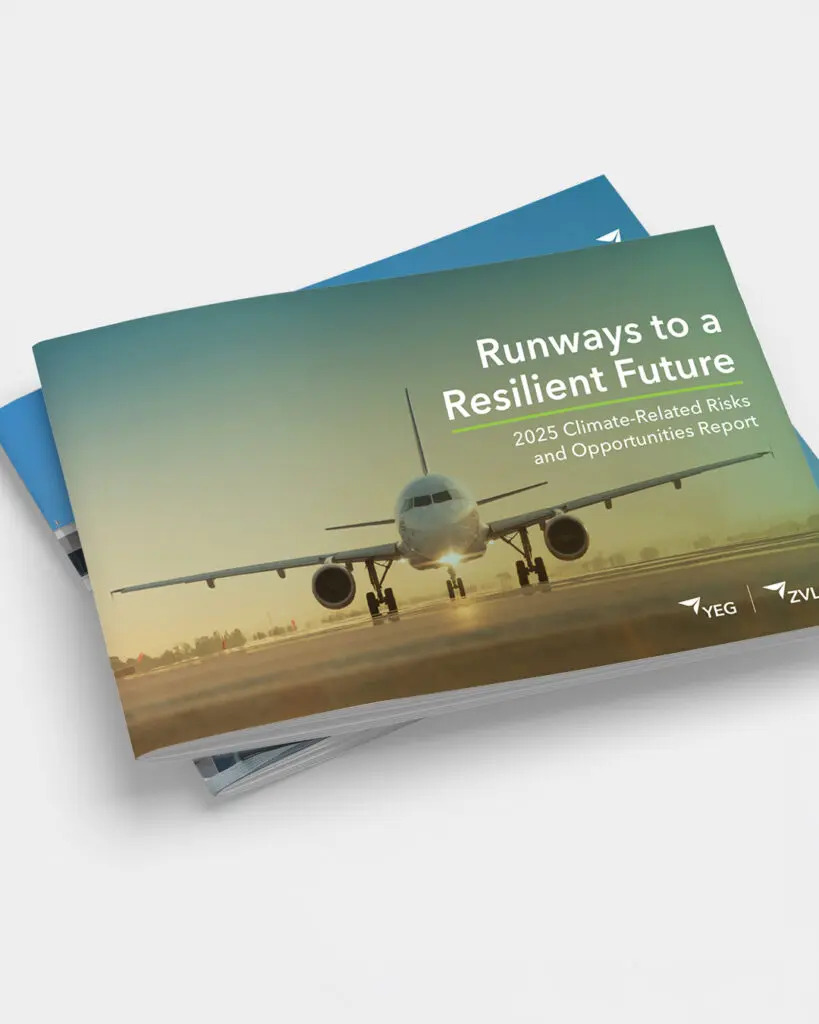
Edmonton Airports’ 2025 Climate-Related Risks and Opportunities Report, Runways to a Resilient Future, outlines how changing weather patterns and more frequent extreme weather events could affect airport operations, infrastructure and the broader regional economy in the years ahead.
As a vital transportation hub for passenger travel, cargo movement, trade and northern connectivity, Edmonton International Airport (YEG) and Villeneuve Airport (ZVL) play an essential role in keeping people, goods and services moving. Ensuring the airports remain resilient in the face of climate-related challenges is critical to maintaining that reliability.
The report identifies a range of potential impacts associated with a changing climate, including increased terminal cooling demands during periods of extreme heat, added stress on runways and infrastructure caused by freeze-thaw cycles and operational disruptions resulting from severe wind and wildfire smoke. These risks have implications not only for airport operations, but also for travellers, businesses and communities that depend on reliable air service.
“For passengers, climate resilience helps support safe, efficient and dependable travel. For businesses, it helps protect supply chains and the movement of time-sensitive goods,” says Marion Chivot-Legis, Director of Sustainability Strategy, Edmonton International Airport. “For northern and remote communities, where air service is often a critical link, maintaining reliable airport operations is particularly important.”
Through ongoing climate risk assessment, emissions reduction efforts and investments in sustainable infrastructure, Edmonton Airports is taking proactive steps to ensure the airport remains resilient, reliable and ready for future growth.
Key Milestones Achieved on the Journey to Net-Zero
- Airport Carbon Accreditation (ACA) Level 3: ACA Level 3 achieved, recognizing expanded Scope 3 emissions reporting including aircraft landing and take-off cycles and staff business travel.
- Verified GHG Emissions Inventory: A third-party verified greenhouse gas inventory across all Scope 1, 2 and 3 emissions. Total 2024 emissions measured at 248,882 tCO2e — a decrease from the 2023 baseline of 272,099 tCO2e.
- Renewable Energy and Carbon Offsets: 500 MWh of renewable energy credits through Bullfrog Power and secured Verra Registry Verified Carbon Standard offsets for business travel through the Nature Conservancy of Canada’s Darkwoods Forest Carbon Project.
The report also highlights the opportunities that come with the global transition to a lower-carbon economy. With Alberta producing approximately 60 per cent of Canada’s hydrogen supply, Edmonton Airports is well-positioned to help advance emerging aviation technologies, including hydrogen and sustainable aviation fuel (SAF) infrastructure. These investments support the long-term competitiveness of the region while helping prepare the aviation sector for evolving environmental requirements.
2025 Climate-Related Risks and Opportunities Report: Runways to a Resilient Future is available at flyyeg.com/climate.
About Edmonton Airports
Edmonton International Airport (YEG) and Villeneuve Airport (ZVL) are driving economic prosperity for the Edmonton Metropolitan Region and beyond, generating a combined economic output of over $5.4 billion and supporting over 22,500 jobs. YEG’s Airport City Sustainability Campus is a living lab for innovation and sustainability, including hydrogen and drone technology, supporting our advancements toward net-zero by 2050. As an Airport for Everyone, YEG provides a welcoming space that fosters diversity, equity and inclusion.
Contact
1000 Airport Rd NW
Edmonton
Alberta
Canada
T9E 0V3
