
Vilnius Airport unveils electric bus fleet, bringing more comfort and less pollution
| Company | Vilnius Airport |
|---|---|
| Date | 12.11.2026 |
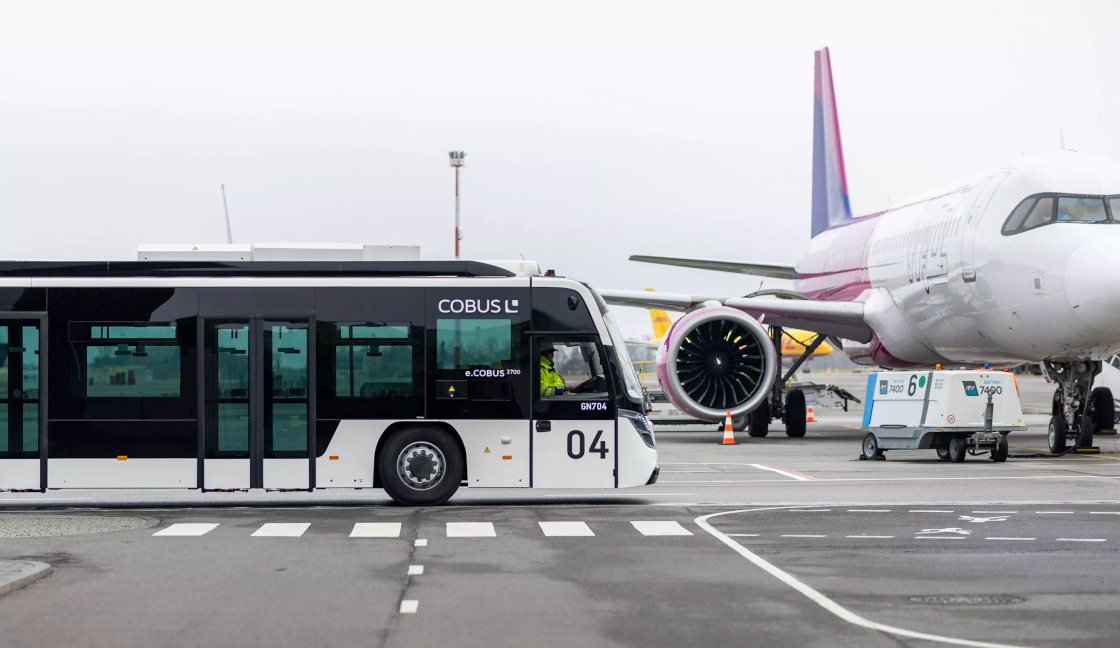
Journeys between the terminal and aircraft at Vilnius Airport will soon be more sustainable, quieter and more comfortable. Lithuanian Airports (LTOU) has introduced 12 new electric buses to replace its entire fleet of diesel passenger buses. The investment totals €7.2 million, including maintenance and repairs. The buses will start carrying passengers to and from aircraft on 16 November.
“When we talk about modernising airports, we usually focus on new terminals and major infrastructure projects. But everyday details matter just as much to passengers, including the few minutes they spend travelling from the terminal to the aircraft. I am pleased that Vilnius Airport will introduce 12 new electric buses designed for all passengers. Whether someone is travelling with young children or luggage, or has a disability, the journey to the aircraft should be comfortable for everyone. This is also another practical step towards reducing the environmental impact of our airports. We want Lithuanian airports to be modern, comfortable and environmentally friendly, and we want passengers to experience these improvements for themselves,” says Živilė Poželienė, Vice-Minister of Transport and Communications.
“This is one of our biggest transport infrastructure upgrades in recent years. Our team and partners have spent several years preparing for it, and we are pleased to share the results today. As passenger numbers grow, we want our airports to grow sustainably and become more comfortable to travel through. The new buses help us do both: reduce emissions and noise while giving passengers a quieter, more comfortable journey to the aircraft,” says Diana Bankauskienė, Acting CEO of Lithuanian Airports.
Electric buses support the NET ZERO strategy
The project is part of LTOU’s ongoing work to switch to electric vehicles and equipment. Under its NET ZERO strategy, the company has committed to becoming climate neutral by 2030 and reaching zero CO₂ emissions from airport-controlled operations by 2040. Switching to electric vehicles and equipment is one of the main ways to meet these goals.
Replacing diesel buses with electric ones will eliminate direct CO₂ emissions from passenger bus transfers, saving an estimated 58 tonnes of CO₂ a year. It will also reduce local air pollution and vehicle noise on the airport apron.
Vilnius Airport has also installed three dual charging stations for the new fleet. These can charge six buses at once, using electricity from renewable sources.
The electric buses will also help operations run more efficiently. Depending on operating conditions, they can run for up to three days on a single charge. The previous diesel buses could run for around 12 hours on a full tank. This longer running time will make it easier to plan bus schedules and charging, helping passenger transfers run more smoothly.

Designed for airports and passenger comfort
The buses, made by COBUS, were designed specifically for airports. Their width, door layout and interior space are suited to passenger flows and luggage, and they are built to manoeuvre on the apron. Each bus can carry up to 100 people at a time.
The journey from the terminal to the aircraft may be short, but comfort still matters, especially for passengers travelling with children or luggage, or those with reduced mobility. The new buses can lower themselves closer to the ground when they stop, and there are no extra steps or raised platforms inside. This makes it easier to board with luggage or a pushchair. Wide doors on both sides also help larger groups get on and off more easily.
Automatic climate control will adjust to the weather outside and help keep the temperature inside comfortable throughout the year. The quieter electric motors will make it easier for passengers to talk and enjoy the journey.
COBUS will continue to support the fleet once the buses start carrying passengers. Under a five-year agreement, the manufacturer will maintain the buses, provide technical support around the clock, monitor their condition remotely, and handle repairs and spare parts supply.
A new way to manage passenger transfers
The fleet upgrade also brings a change in how passenger transfers are managed. From 16 November, Lithuanian Airports will manage and run the service at Vilnius Airport. The company has set up a dedicated unit and brought together a team of 35 experienced drivers.
“Passenger transfers involve much more than the bus journey itself. We need to plan bus and driver schedules and coordinate transfers with flight handling. Bringing the whole process into one system will help us plan our work better and respond faster when the situation at the airport changes.
“Passengers see their journey through the airport as one complete experience, so every stage needs to work smoothly together. By managing transfers ourselves, we can provide the same service and safety standards for all passengers, respond faster to their feedback and improve the service,” says Valdas Stropus, Head of the Operations Department at LTOU.
Contact
Rodūnios kelias 10A
Vilnius
Lithuania
- +370 612 44442,
