Aviramp launches standards survey to address compliance language barrier
| Company | Aviramp GSE |
|---|---|
| Date | 07.05.2026 |
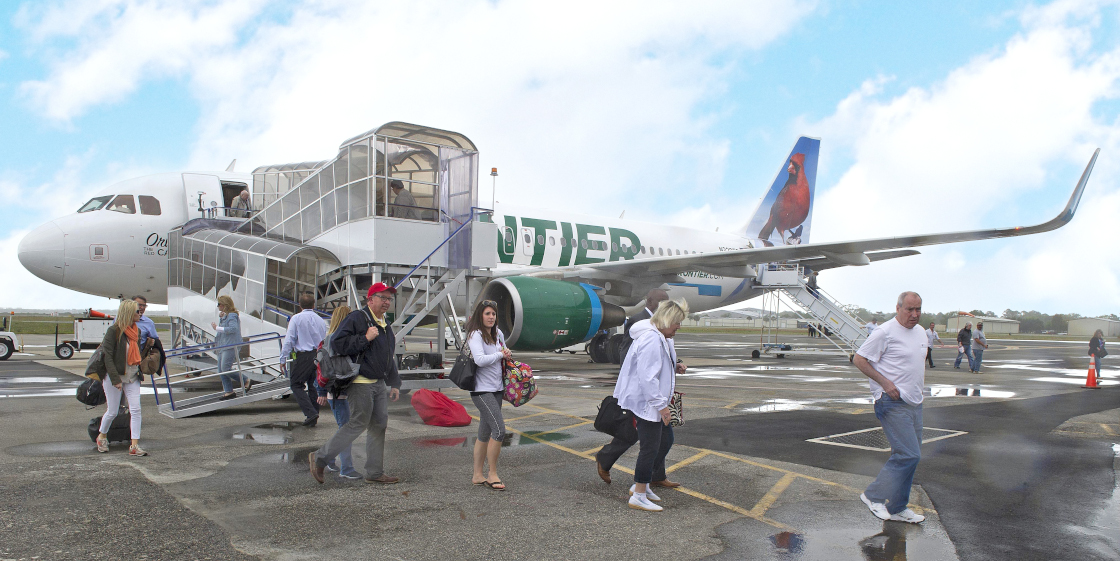
When US airports are committed to investing more than $150 billion in capital projects between 2023 and 2027, why would procurement teams compromise on the equipment standards that protect both passengers and aircraft?
The reality is that a lack of clarity about how US procurement standards map to their international equivalents has created a gap that not everyone in the market is choosing to close.
It is a disconnect that means that on the ground, genuinely compliant equipment and a convincing imitation of it can be practically indistinguishable — until the maintenance bills start arriving.
It is a dynamic that Mark Burton knows well. As Technical Director at UK-based boarding ramp manufacturer Aviramp, he has spent years mapping US procurement standards against their international equivalents. His conclusion is straightforward: the standards themselves are sound. The problem is what happens when it comes to evidencing compliance.
Aviramp exports 40% of its award-winning step-free ramps to the US and launched a new survey on compliance around FAA, ARP and IATA designations at the Annual AAAE Conference in Los Angeles.
“We’ve done detailed comparative work and the US standards and the international benchmarks are saying essentially the same thing,” Burton says. “The gap isn’t in what the standards require. It’s in whether the equipment being supplied actually meets them — and right now, there’s very little in the procurement process which looks closely at that.”
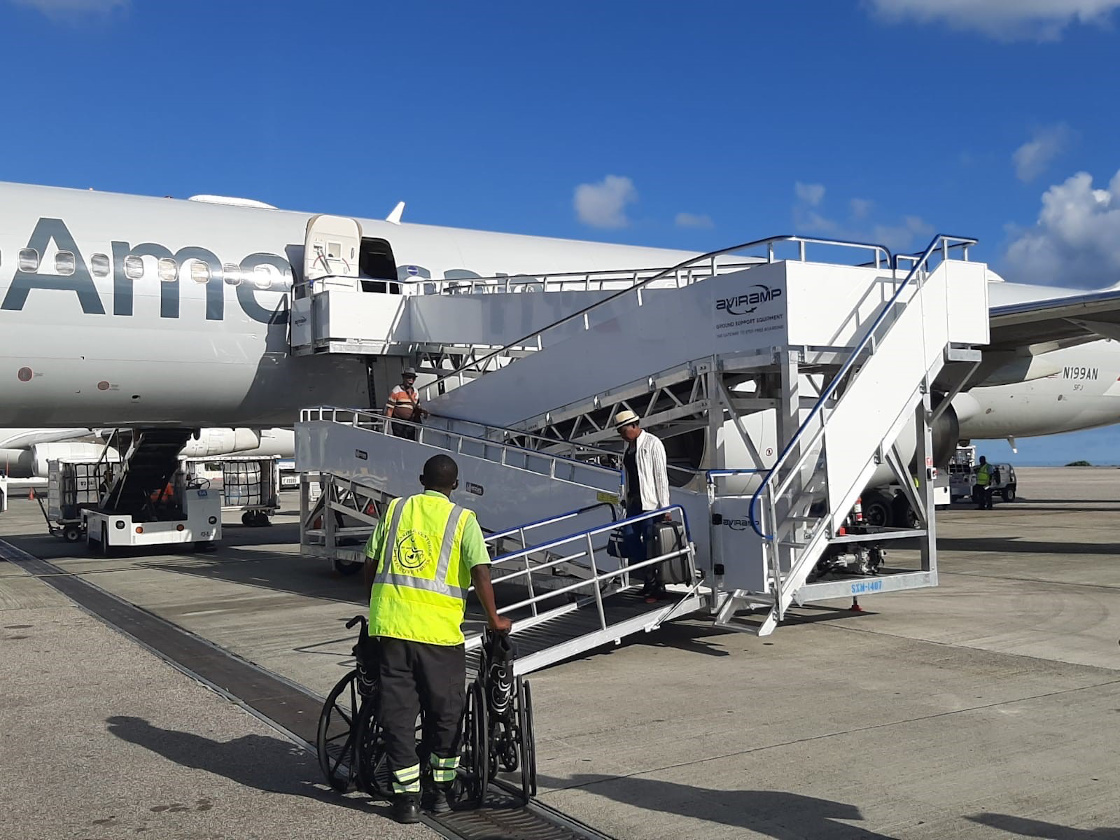
Aviramp’s own 913 Series is independently tested and certified to IATA AHM 913 — the international standard which maps directly to the FAA and ARP designations routinely cited in US tenders. It is the only boarding ramp in the world designed and certified specifically to that standard, with features including proximity sensors and touch-sensitive bumpers developed to meet its requirements.
Burton says the transatlantic dimension adds a layer of complexity. US buyers work in the language of FAA and ARP designations. The international aviation industry largely operates to IATA standards. The two frameworks align closely — but for a procurement manager working to a budget and a deadline, navigating the relationship between them is not always straightforward.
“The standards themselves are rigorous and well-intentioned. What they don’t guarantee is that every product claiming compliance has been independently tested to prove it. That’s the gap — and in a market where initial price dominates the procurement conversation, it tends to stay closed.
“Self-declared compliance and independently verified compliance are not the same thing. In most procurement processes, that distinction never comes up.”
The consequences tend not to show up immediately. They emerge over time — in maintenance schedules, parts availability and operational downtime.
Equipment that looked competitive on a purchase order can become a recurring cost centre within a few years of deployment, by which point the original procurement decision is long forgotten.
Wayne Lawrence, Aviramp’s Commercial Director, has been examining this from a financial perspective. His focus is total cost of ownership — a metric he believes deserves far greater prominence in ground support equipment procurement than it currently receives.
“Purchasing departments are working to cost-saving KPIs and initial price is the number that’s visible,” he says.
“Total cost of ownership isn’t, at least not until it’s too late. When you factor in maintenance frequency, operational downtime and residual value over the life of the equipment, the economics of a procurement decision can look very different from what the original spreadsheet suggested.”
The residual value point is one Lawrence is particularly focused on. Equipment built and tested to rigorous standards holds its value. Equipment that was never fully compliant — even if it passed through a procurement process that indicated otherwise — depreciates quickly, carries higher maintenance demands and, in the worst cases, creates safety and liability exposure that nobody anticipated at the point of purchase.
It is against this backdrop that Aviramp has launched a new piece of industry research at the AAAE Annual Conference and Exposition in Los Angeles. A survey will gather real-world data from ground handling managers and airport operators on standards awareness, maintenance costs, equipment lifespan and total cost of ownership — building an evidence base that goes beyond individual experience and anecdote.
Operation director Lee Burrows headed to LA to meet with airport and airlines representatives at AAAE.
“The conversation about standards in the US market tends to happen at the level of claims and counter-claims. What’s missing is data. We want to understand what operators are actually experiencing in the field — maintenance costs, reliability, how long equipment is lasting against projected lifespan. If the picture is what we think it is, that evidence should be part of every procurement conversation going forward.
“The US aviation industry has rigorous standards and they exist for good reasons — passenger safety, aircraft protection, operational reliability. The question worth asking is whether the current procurement process is doing enough to ensure those standards are genuinely met, rather than simply cited. That’s the conversation we’d like to see happen — and it’s the conversation we’ve started in LA.”
Details of the survey can be found here
Contact
Stafford Park 15
Telford
Shropshire
United Kingdom
TF3 3BB
- 0044 (0) 1952 291 220
