
Bucher’s AI-powered sweepers touch down at airports
| Company | Bucher Municipal Limited. |
|---|---|
| Date | 14.09.2026 |
Bucher is redefining how airport sweepers function with advanced AI technology and automation. Madison James visits the company’s manufacturing facility in Dorking to find out more.
By Madison James
Originally published in Airside International (Autumn 2026)
With a history stretching back over 200 years in Europe, Bucher is well established as a municipal equipment manufacturer. Now, it is targeting expansion in the airport space.
Boasting a global presence, with five factories in Europe, the company’s vehicle range features snow ploughs, blowers and spreaders, as well as both compact and truck-mounted sweepers. Bucher is proud to design and manufacture the latter machines in Dorking, employing 650 people both on- and offsite and supplying over 600 pieces of equipment per year to the UK market.
As the company has evolved, several well-known brands have congregated under the Bucher Industries umbrella. Johnston sweepers, whose name has become synonymous with the product, are already a common sight at many airports.
Though Bucher’s products are embedded at airports globally, its concentration has shifted over the years to the provision of truck-mounted road sweepers and other products. However, in 2022, it renewed its focus on the aviation industry, winning contracts to supply 63 sweepers to the German Air Force, and most recently to Heathrow Airport.
As part of this redirection, Bucher has accelerated its research and development in sweeper innovation, particularly in the realm of Advanced Driver Assist Systems (ADAS). This year’s SWIFT Europe conference at Heathrow saw Bucher showcasing a MaxPowa V sweeper with new SmartAssist integration, designed to add intelligent automation and real-time monitoring capability.
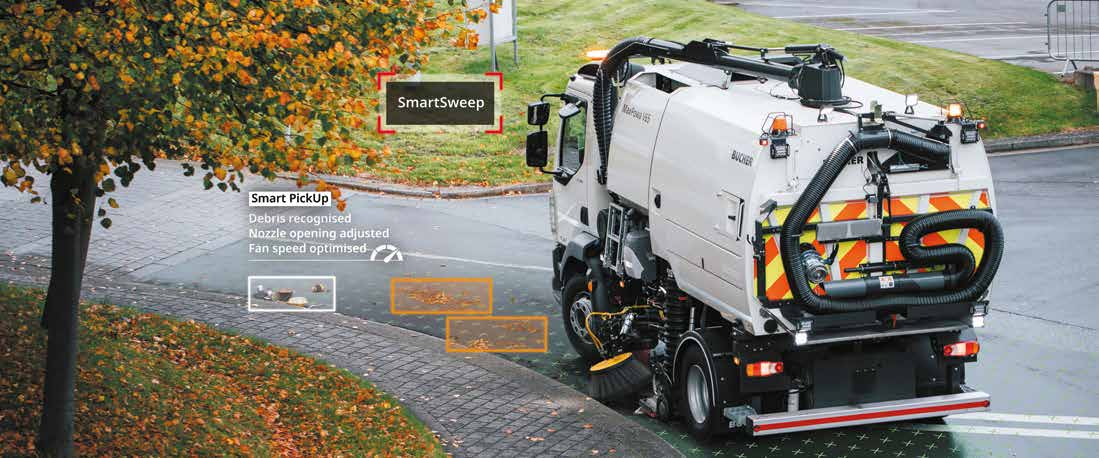
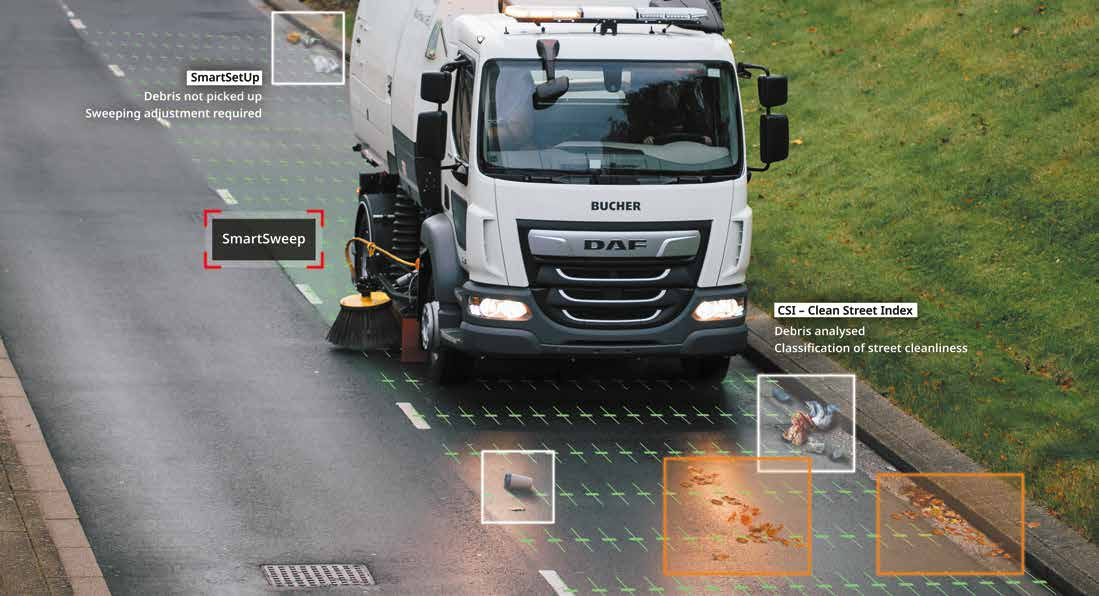
Using AI and real-time image analysis, SmartAssist detects debris and automatically adjusts nozzle operation and suction power. This increases efficiency, saves fuel and reduces the cognitive load on the operator, allowing them to focus on the job at hand.
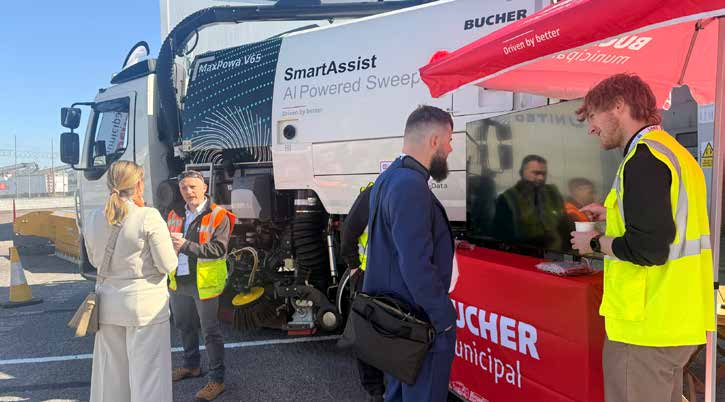
Gareth Knopp, innovation and simulation manager at Bucher Municipal UK, stresses that the equipment is intended to support human workers rather than replace them.
“It’s not AI robots coming to take your jobs. It’s meant to be an advanced driver assistance system,” he says. “We’ve optimised the physics – now we’re trying to optimise the control.”
The technology signals a shift from the conventional machine lifecycle, where a vehicle’s capability is defined by the point at which it was purchased, to a digital-first model in which new capabilities and upgrades can be continuously added to the equipment.
Knopp says the value of SmartAssist, which is currently in beta testing, has so far been easier to demonstrate for municipal applications. Bucher currently has ten sweepers out in the field and is using real-world operational data gleaned through Bucher Connect, its telematics system, to refine the technology and improve performance on roads. The company is now looking to showcase potential airport use cases, including the clearance of FOD and use on periphery roads, freight areas and aprons.
When it comes to equipment procurement at airports, suppliers are increasingly evaluated not only on machine specifications, but sustainability and ESG reporting. Indeed, when the SmartAssist project began a decade ago, Bucher initially focused on sweeper electrification.
“We wanted to be the first to market in Europe with a fully electric truck-mounted sweeper,” says Knopp.
“The challenge you’ve got is a pure battery electric vehicle often doesn’t have the range, or the cost is prohibitive.
“We see that the future is a mixture of diesel with replacement fuels, like hydrotreated vegetable oil (HVO) or gas-to-liquid (GTL). We also see hydrogen burning [as an option] in our specific application.
“Systems like [SmartAssist] enable you to use less of those fuels, whatever they are, and more effectively, so you can do more with less.”
The technology can also help support workers in the context of rising skill shortages within aviation. The ground handling industry, in particular, is encountering significant challenges in retaining and recruiting skilled staff. The Covid-19 pandemic accelerated this phenomenon: many employees have since left the sector, never to return.
“The environment is becoming more complex, and the operator role is under more pressure,” explains Knopp. “They’re trying to get more distance covered in the same amount of time, and there’s less margin for error – all as we’re talking about an ageing and shrinking workforce.
“[SmartAssist] is a leveller of performance. In theory, an operator who just got their HGV licence can operate the machine like they have 20 years of experience.”
Alongside these pressures, technological innovation in processing power, greater fleet connectivity, increased availability of operational feedback and advancements in computer vision have all created favourable conditions for the development of technology like SmartAssist. Looking ahead, Knopp sees further opportunities for new features and capabilities.
“At the moment we’re controlling the fan speed and the nozzle – next it will be operating the brush,” he says. “We could also get to the point where the vehicle could contextually know it’s in an airport, or if it’s raining, and therefore may need to do something differently.”
Alongside its technological innovation, equipment reliability is a key focus area for Bucher. The company’s after-sales support is bolstered by its large customer service network, comprised of eight customer service centres and over 80 engineers. Moreover, unlike many competitors, Bucher manufactures machine components in-house, enabling it to rapidly make and deliver non-stock parts.
Bucher’s Swiss shareholders recently committed to a £40 million (US$54 million) investment in the site, sending a strong signal of confidence – both in Bucher’s performance and in the long-term future of UK manufacturing. As a result, a broader site redevelopment is planned over the next five years to replace older buildings with newer, large units.
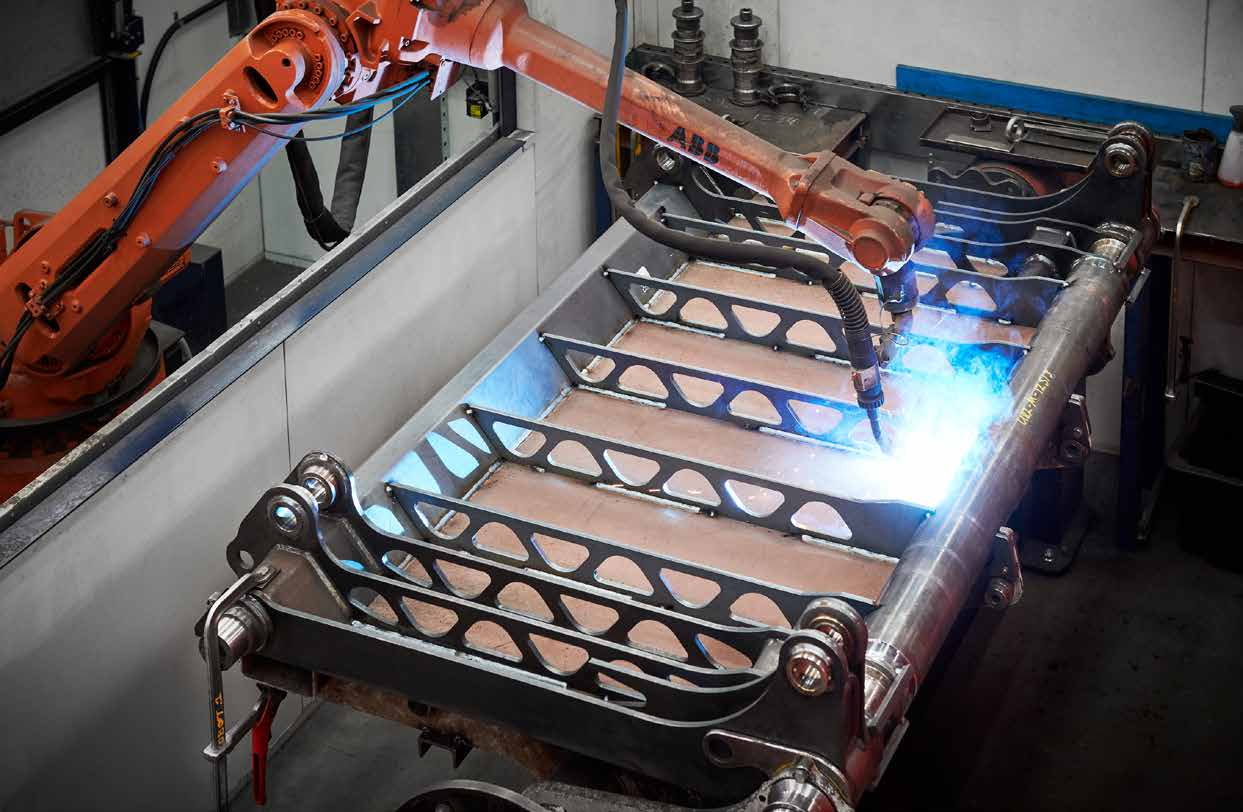
Moreover, the company is introducing a new robotic welding facility, which is set to be operational in about a year, to supplement its existing 40 manual welders. Even with the addition of robots, Bucher affirms that a skilled workforce remains essential to load the machines with metal and to keep the workflow going in case of issues.
Going forward, the company intends to convince the market of the benefits that SmartAssist can bring, bolstered by the continued modernisation of its manufacturing facilities.
“We’re at the Henry Ford moment,” affirms Knopp, referring to the difficulty consumers sometimes have with conceptualising the advantages of new inventions. “If you asked our customers what they wanted, it would be a faster sweeper.
“We’ve created a valuable thing – now we’ve got to make it valuable for the people.”
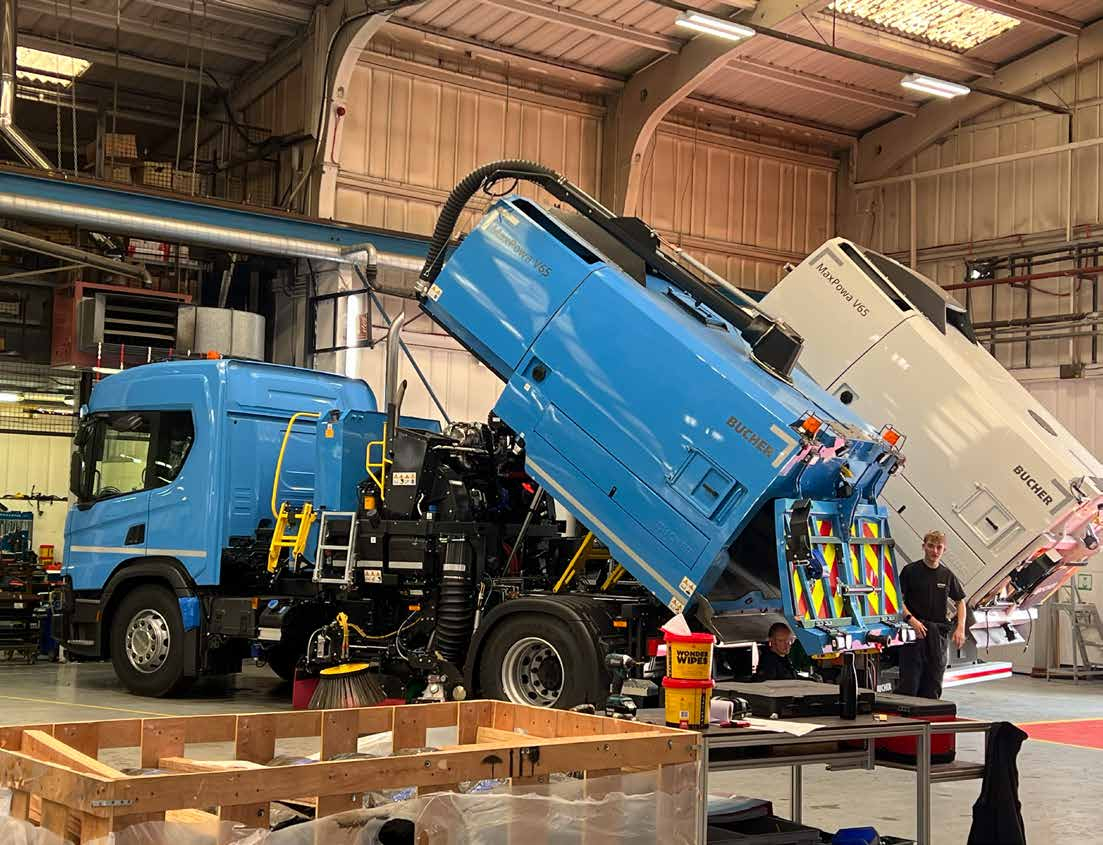
In 2022, Bucher renewed its focus on the aviation industry and has supplied sweepers to several airports
