Flexible Lounge Systems for High-Traffic Public Spaces
| Company | Zaneti |
|---|---|
| Date | 19.05.2026 |
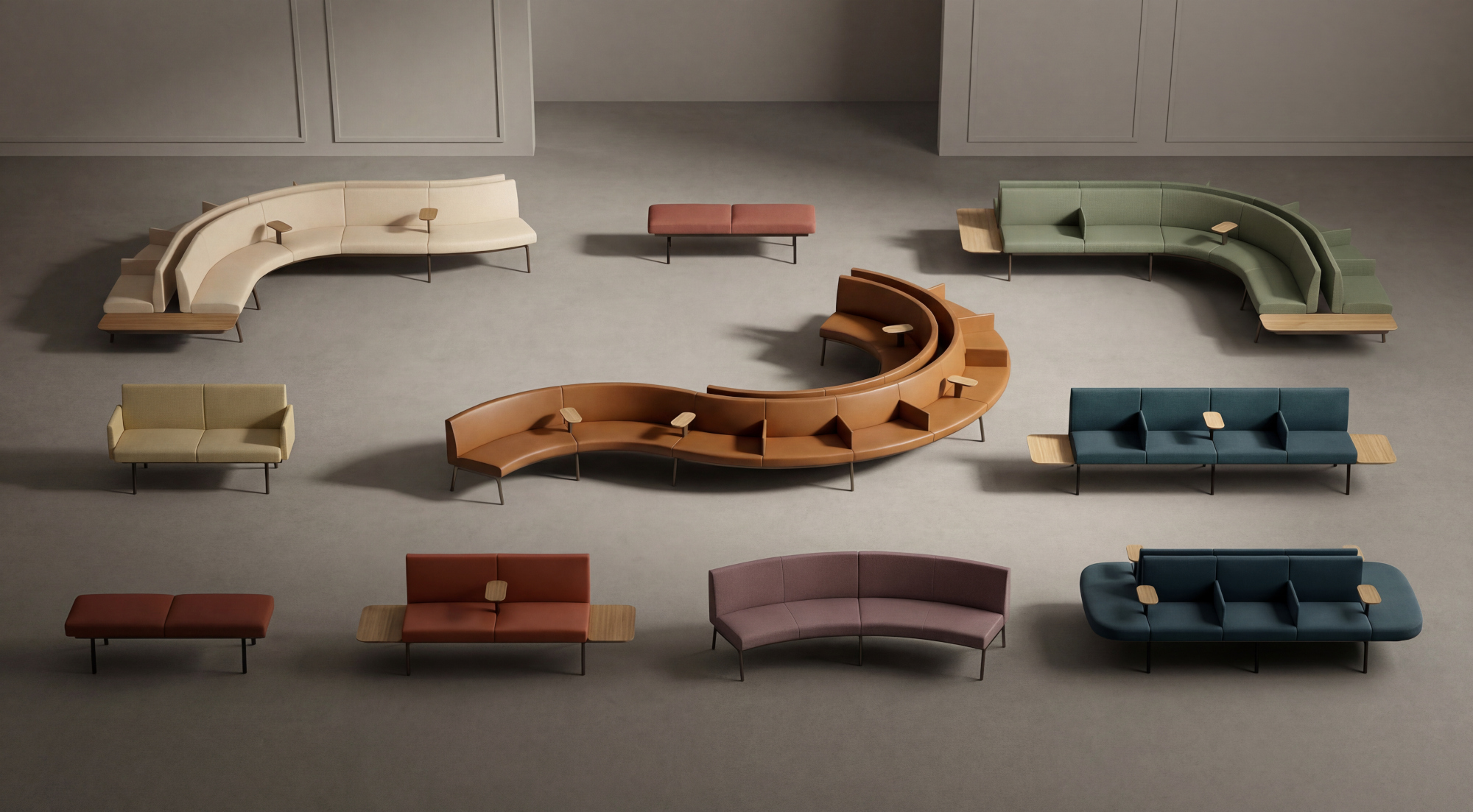
The Future of Airport Lounge Seating and Passenger Waiting Areas
For decades, airport seating followed a predictable formula.
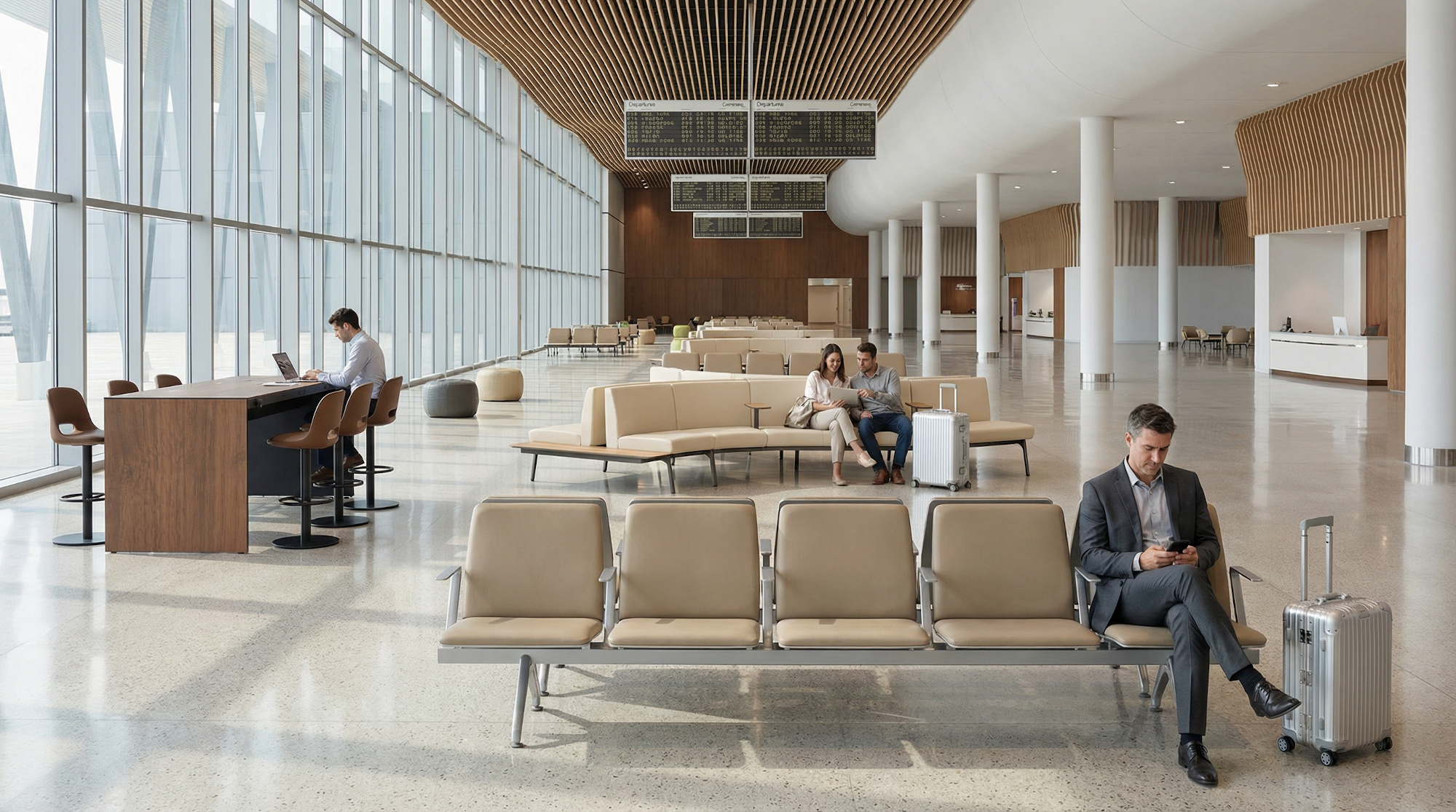
Linear beam seating. Fixed layouts. Minimal flexibility. Functional solutions designed primarily around passenger volume rather than passenger experience.
That model is now evolving.
Across both international and regional airports, operators and design teams are rethinking how waiting areas function within the broader terminal environment. Passenger expectations have shifted, dwell times have increased, and terminals are being asked to deliver a more flexible and comfortable experience while still meeting strict operational requirements.
As a result, lounge seating is becoming a more important part of contemporary terminal planning.
––Passenger Behaviour Has Changed
Modern passengers use terminals differently than they did even a decade ago.
Travellers are arriving earlier, spending longer periods inside terminals, working remotely while travelling, charging multiple devices, and seeking quieter or more relaxed waiting environments.
This has created demand for more varied seating experiences throughout the passenger journey.
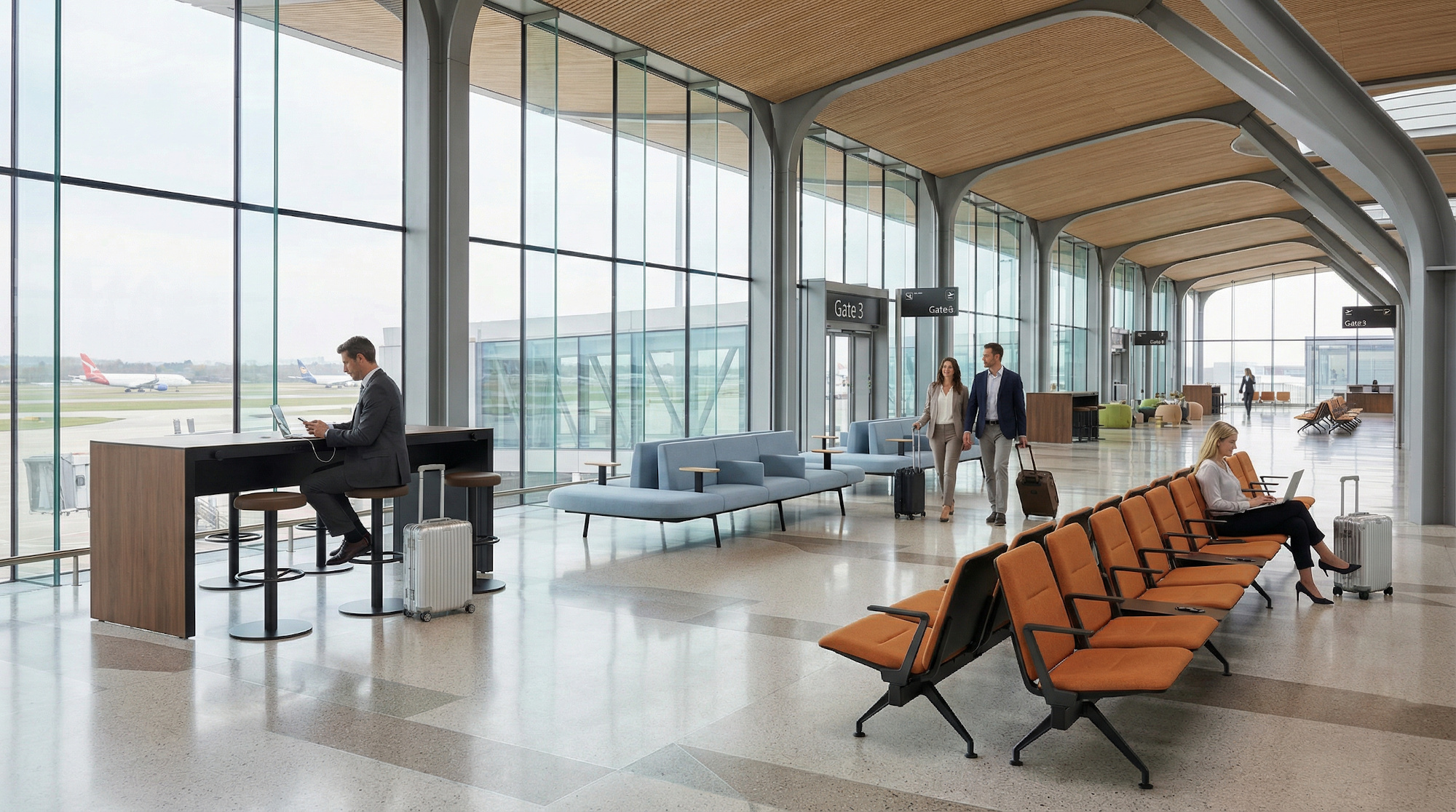
Rather than relying solely on traditional gate seating, many airports are now introducing layered seating strategies that combine:
Beam seating
Modular lounges
Charging hubs
Informal work areas
Family waiting zones
Semi-private seating environments
The objective is no longer simply maximising seat count. The focus is shifting toward creating adaptable passenger spaces that improve comfort, circulation, and overall dwell experience.
Why Modular Lounge Systems Are Gaining Attention
One of the biggest shifts within airport seating is the move toward modular lounge systems.
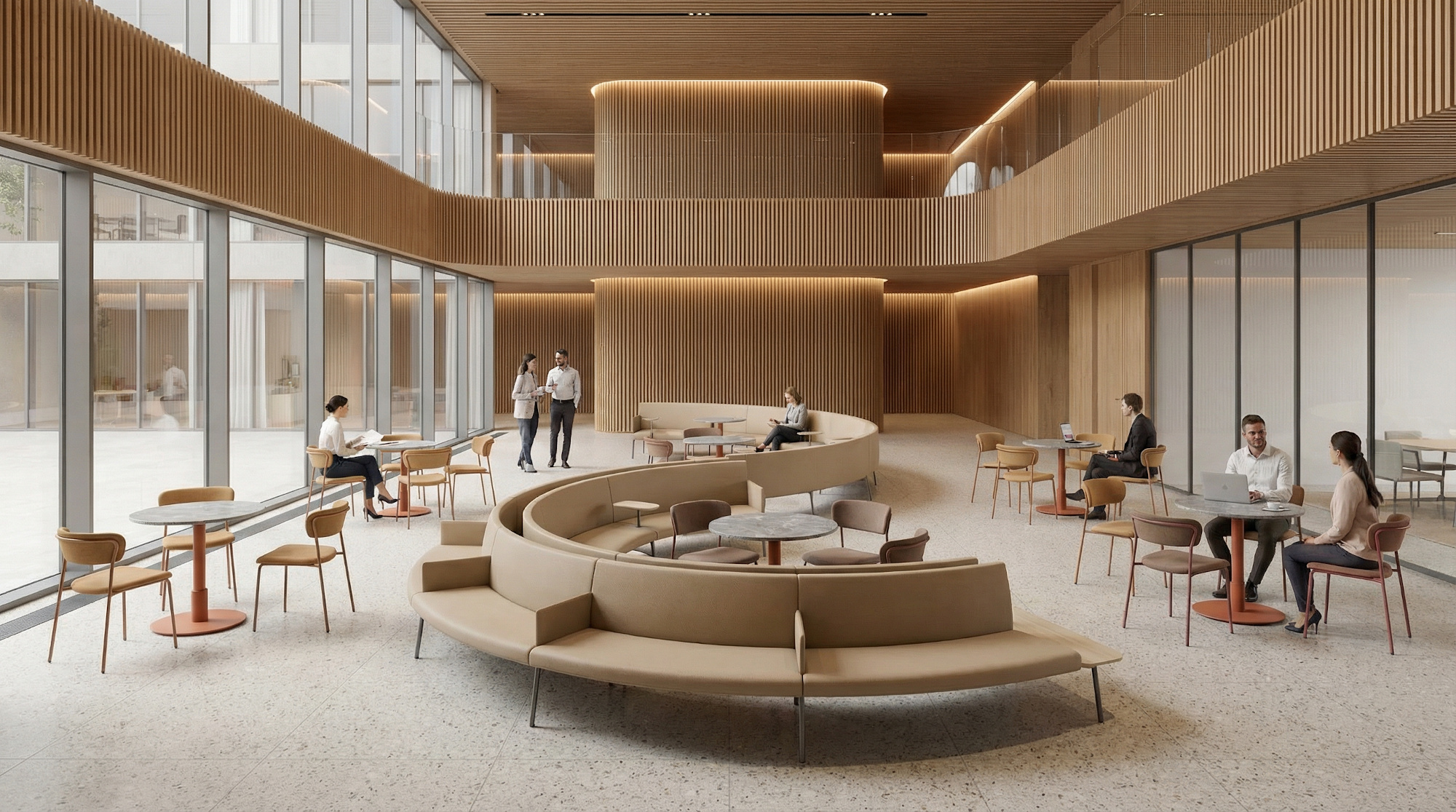
Unlike fixed infrastructure, modular systems allow terminals to adapt layouts over time as passenger flow, airline operations, and terminal requirements evolve.
This flexibility is becoming increasingly important as airports continue upgrading existing terminals while planning for future operational changes.
Modular lounge systems also allow airports to create differentiated waiting areas without major architectural works.
This may include:
Premium waiting environments
Integrated charging zones
Transitional passenger spaces
Airline-adjacent seating areas
Flexible public waiting lounges
Integrated power is now another critical consideration. Device charging has increasingly become part of core passenger infrastructure rather than an optional feature.
At the same time, airport furniture must still meet the demands of high-traffic public environments, including:
Long operational hours
Constant daily use
Luggage impact
Cleaning and maintenance requirements
Accessibility standards
Long lifecycle durability
The challenge for manufacturers is balancing these operational requirements while maintaining a refined architectural appearance.
––Designing for Public Infrastructure Environments
Airport seating differs significantly from hospitality or workplace furniture.
Products used within terminals must perform consistently under constant public use while still contributing positively to the visual identity of the space.
As a result, architects and airport operators are increasingly looking for seating systems that combine:
Modular flexibility
Infrastructure integration
Commercial durability
Ease of maintenance
Passenger comfort
Architectural consistency
This has driven growing demand for seating systems developed specifically for airports and public spaces rather than adapted from residential or hospitality settings.
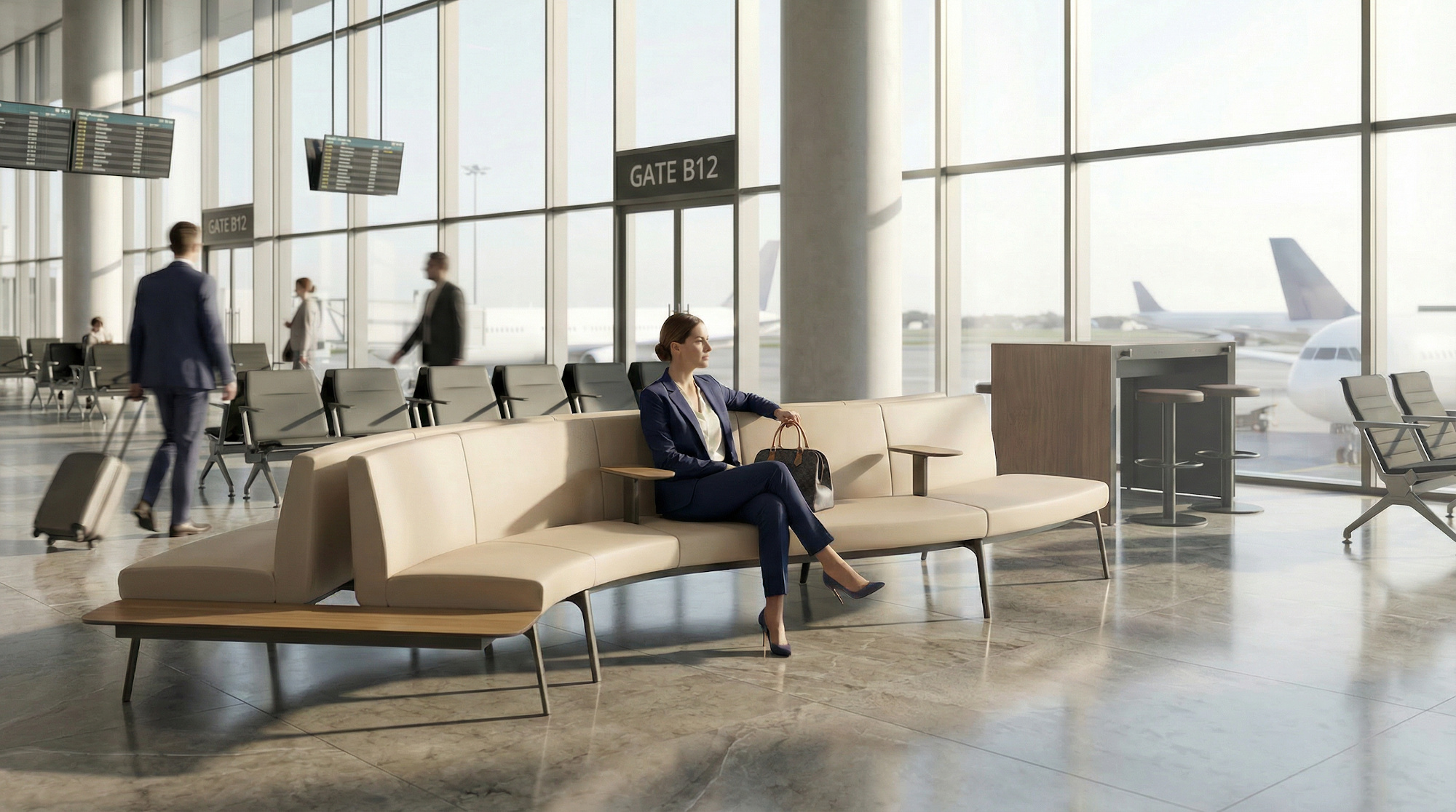
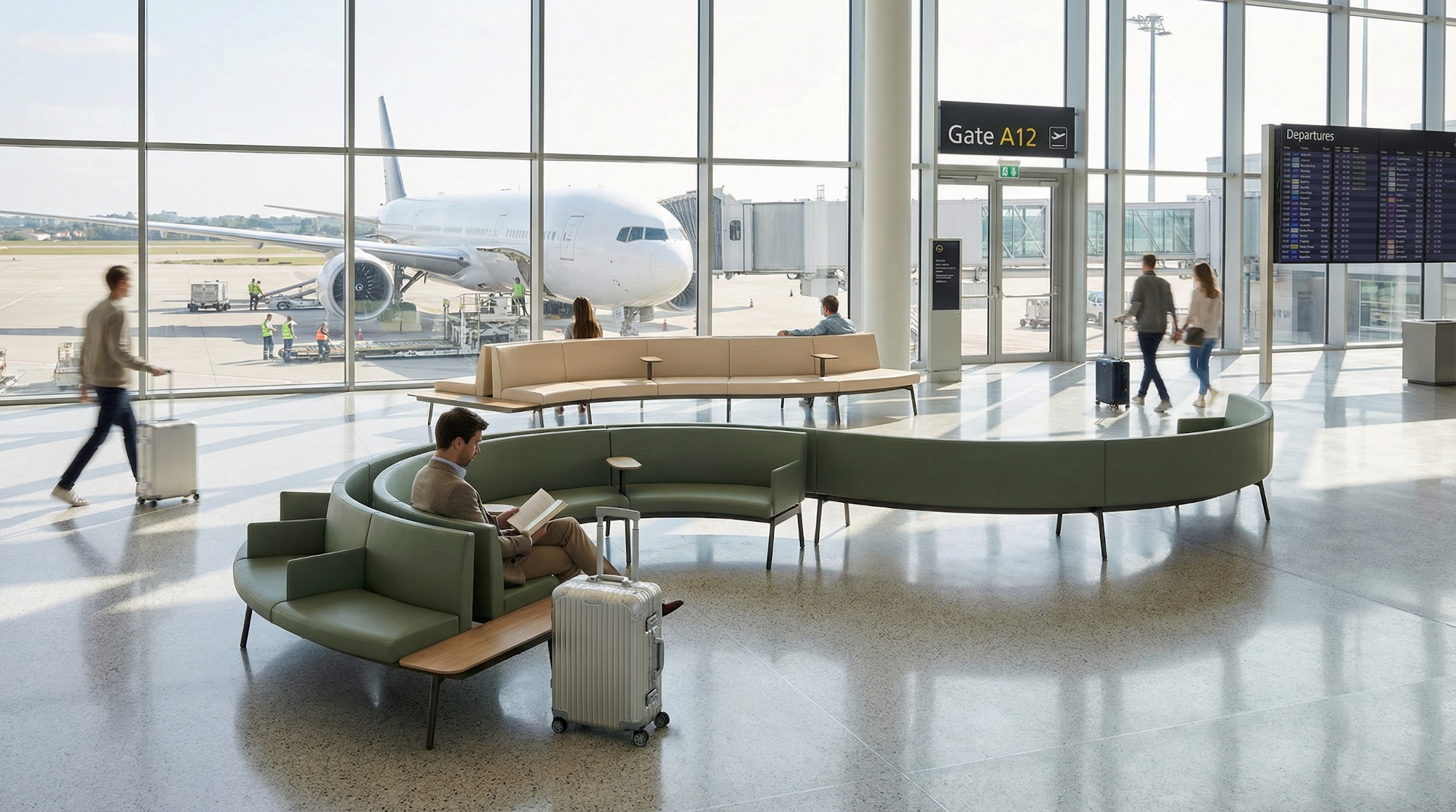
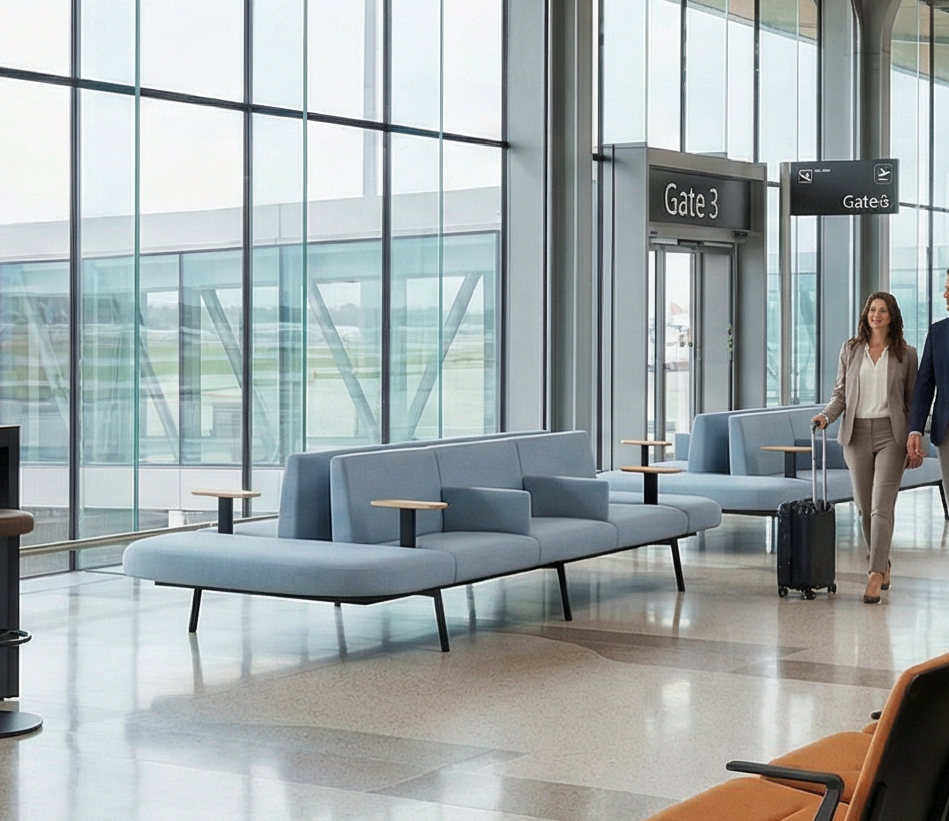
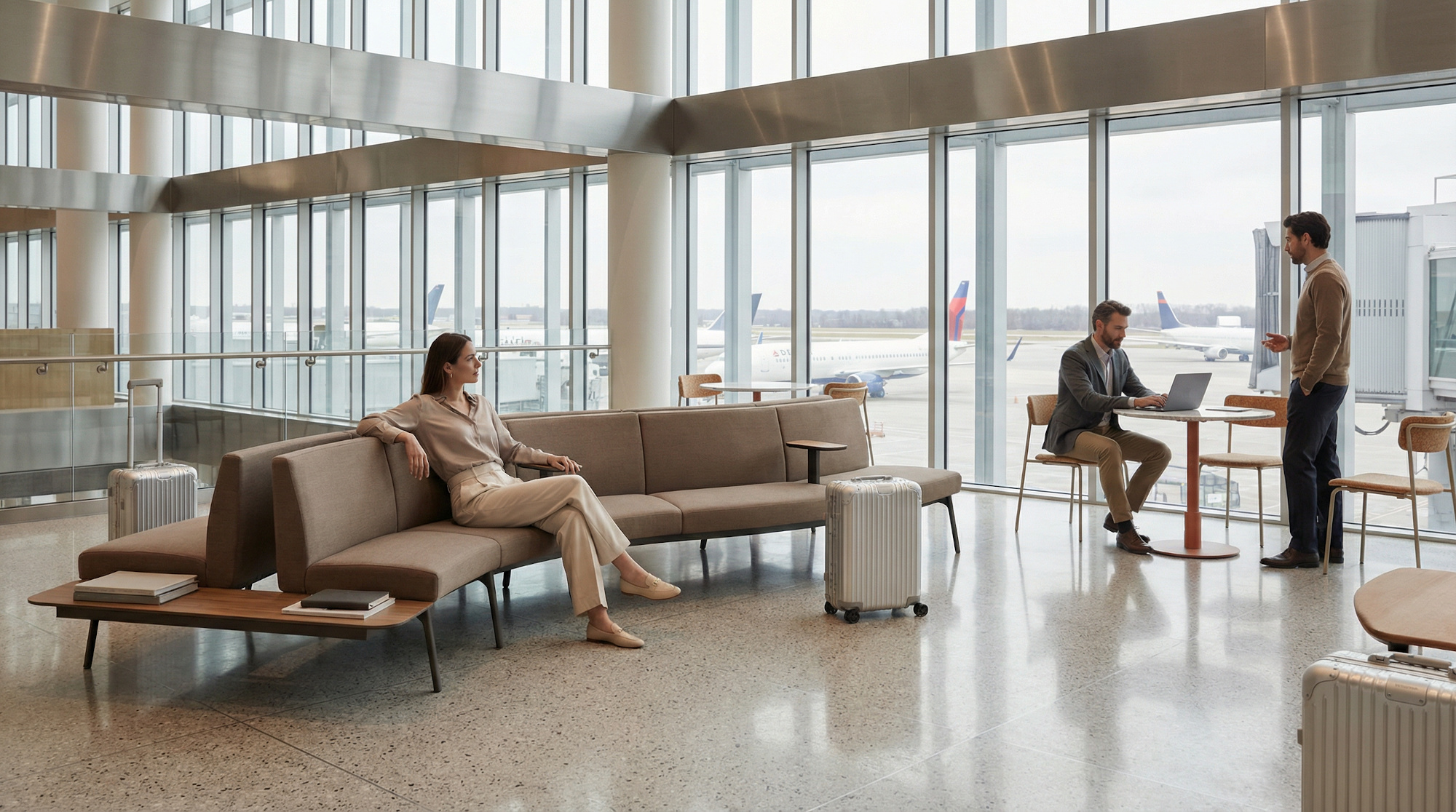
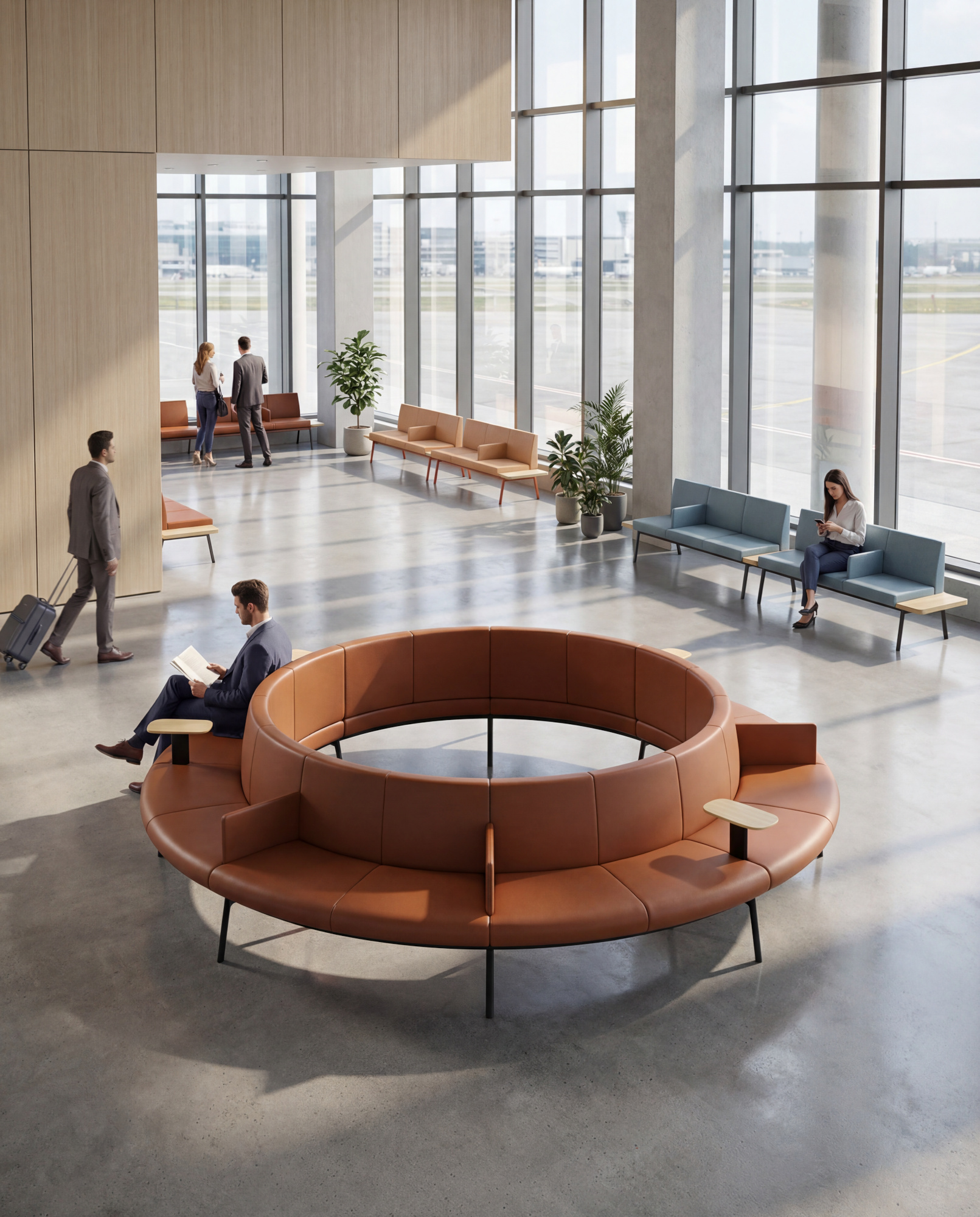
One example is the Zaneti Altitude Lounge, a modular lounge system designed for airport and public space applications. The collection recently received the Australian Good Design Award, recognising its approach to flexibility, public space functionality, and integrated passenger experience.
The system allows terminals to create adaptable lounge environments through configurable modules, integrated power options, and layouts suited to changing passenger needs.
The Role of Lounge Seating Within Modern Terminals
Lounge seating is unlikely to replace traditional beam seating entirely.
Instead, airports are increasingly adopting mixed seating environments where different seating typologies support different passenger behaviours throughout the terminal journey.
Beam seating continues to perform efficiently in high-density gate areas.
However, modular lounge systems are increasingly being introduced within:
Premium waiting areas
Departure lounges
Charging zones
Transitional circulation spaces
Family seating environments
Flexible public waiting areas
This layered approach allows airports to improve passenger experience while still maintaining operational efficiency and circulation performance.
Looking Ahead
As airports continue investing in terminal upgrades and passenger experience initiatives, seating is becoming a more strategic part of terminal planning.
The conversation is no longer limited to seat quantity alone.
Operators, architects, and infrastructure teams are increasingly evaluating how furniture systems contribute to:
Passenger comfort
Dwell quality
Terminal flexibility
Infrastructure integration
Long-term operational performance
Within this shift, modular lounge systems such as the Zaneti Altitude Lounge reflect a broader change taking place across airport design — where seating is increasingly expected to operate as part of the terminal infrastructure itself, rather than simply furniture placed within the space.