GPS Tracking for Ground Support Equipment
| Company | ElectroAir |
|---|---|
| Date | 05.05.2026 |
ElectroAir offers a GPS Tracking & Fleet Management Module as an optional add-on for selected ground support equipment. It helps airports, ground handlers, and MROs improve visibility into asset location, operating hours, utilization, maintenance planning, and selected safety-related events through web and mobile access.

Why Ground Support Visibility Is Becoming a Strategic Priority.
In aviation, resilience is not built only through large infrastructure projects, new terminals, or long procurement cycles. Increasingly, it is built through better control over daily operations. That is one reason digital visibility is becoming more important across the industry. In March 2026, IATA highlighted three priorities for the global air cargo sector: accelerating digitalization, strengthening global standards, and enhancing safety and security. IATA also stressed that, amid tariff pressure and geopolitical shocks, the industry should build resilience in the areas it can control or influence. While that statement was made in an air cargo context, the same logic applies strongly to airside ground operations.
For airports, ground handlers, and MROs, one of those controllable areas is the way ground support equipment is monitored, used, maintained, and secured. A unit may be technically sound, but if nobody knows where it is, how often it is used, how long it has been idling, who operated it, or when it actually needs service, inefficiencies build up quickly. That is why ElectroAir offers a GPS Tracking & Fleet Management Module as an optional add-on for selected equipment: to help customers move from fragmented visibility to more connected, traceable, and actionable fleet management.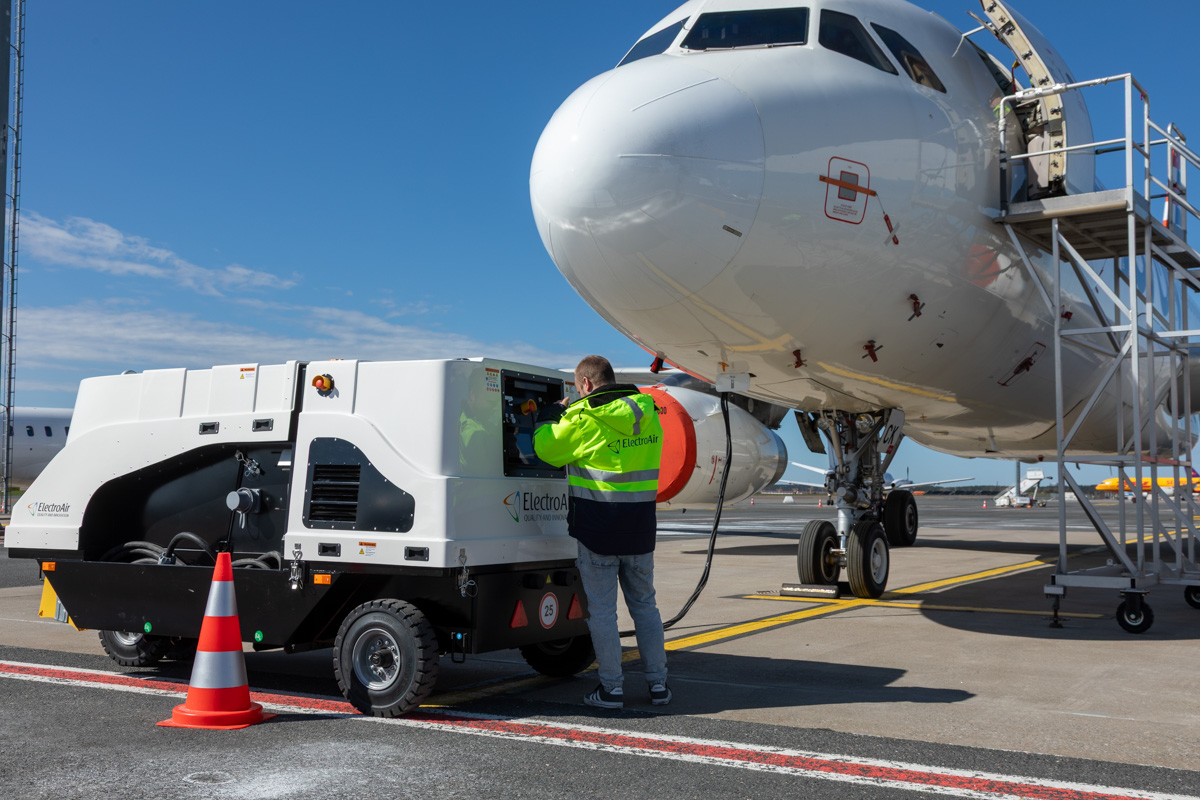
Fragmented data is still a real operational problem
At ElectroAir, we see fragmented data as one of the practical challenges still affecting ground operations today. When equipment information is spread across manual checks, delayed hourmeter readings, and disconnected records, it becomes harder to maintain a clear view of asset use, maintenance needs, and day-to-day fleet activity. We believe this is exactly where GPS-based fleet visibility can make a real difference. By bringing location, operating hours, status information, and alerts into one connected system, operators gain a clearer and more timely view of how equipment is being used. In our view, that supports better operational control, and a more informed approach to managing ground support equipment.

Why GPS tracking is no longer just “nice to have”
For many years, GPS on GSE was often viewed as an optional convenience feature. Today, it is becoming a more practical management tool. When teams operate across remote stands, busy ramps, and mixed fleets, visibility matters. The ability to locate the nearest available asset, review where a unit has been used, monitor operating hours automatically, and receive maintenance reminders can improve daily coordination without adding another manual process. So, the value of GPS tracking is not just about seeing a dot on a map. It is about improving control over the assets that support aircraft turnaround, line maintenance, and daily apron activity.
Where digital fleet visibility creates value
What makes this kind of module increasingly relevant is not the technology alone, but the operational reality it addresses. Operators may not always have a clear, real-time picture of where assets are, how intensively they are being used, how efficiently the fleet is performing, or when maintenance should be scheduled based on actual usage. At the same time, safety, security, and the performance of electric assets remain high on the agenda. In this context, connected GPS-based fleet visibility supports the wider industry direction toward greater digitalization, stronger operational consistency, and safer ground operations.
1. Accelerating digitalization
If a fleet is still managed through partial spreadsheets, manual checks, or inconsistent reporting, digitalization remains incomplete. The ElectroAir GPS Tracking & Fleet Management Module helps close that gap by collecting operational data such as location, engine hours, mileage, speed, energy level, status, impact events, and usage patterns, then making that information visible through the web platform and mobile app.
2. Strengthening standards and consistency
Fragmented systems and inconsistent implementation create inefficiency. In ground operations, that same issue shows up when one team records usage manually, another tracks incidents separately, and another depends on verbal handovers. A connected tracking layer does not replace industry standards, but it can support more consistent operational discipline by giving teams one shared source of equipment data for maintenance planning, event review, and usage oversight. That is a practical form of standardization at operational level.
3. Enhancing safety and security
The system is designed to support safer and more controlled ground operations by giving operators better visibility into how equipment is accessed, handled, and used throughout the day. With functions that can support access control, zone awareness, speed management, safety checks, and event monitoring, it helps create a more structured operating environment while also making it easier to spot patterns that may require follow-up. In this way, the value lies not only in added control, but in stronger day-to-day awareness across the fleet.
What the ElectroAir add-on actually enables
ElectroAir’s optional GPS Tracking & Fleet Management Module is designed to help customers track, manage, and optimize powered GSE. It supports real-time monitoring inside and outside, automatic capture of engine or operating hours for both electric and diesel GSE, geolocation through satellite positioning, and built-in connectivity to support real-time data exchange. From an operational perspective, this gives customers a more complete view of questions such as:
• Where is the unit now?
• How often is it being used?
• Is it working, idle, moving, or available?
• How many hours has it actually accumulated?
• Has it been exposed to shocks or risky operation?
• Is it being used by authorized personnel?
• When should it be serviced based on real usage, not guesswork?
For ElectroAir, this solution is a logical extension of our offer, giving customers the option to combine reliable ground power equipment with better visibility, usage tracking, and operational control.
Better maintenance starts with better data
Maintenance is one of the areas where connected fleet data can make an immediate difference. When engine hours or operating hours are captured automatically, service planning becomes more accurate, helping teams move away from manual tracking and toward maintenance based on real equipment usage. That can help reduce unnecessary servicing, avoid overdue maintenance, and support better fleet availability over time.
GSE scoring functions can help optimize maintenance operations by using real usage indicators such as harsh braking, harsh acceleration, harsh turns, harsh jumps, and shock events. This gives operators a clearer basis for planning service, identifying wear-related issues earlier, reducing unnecessary maintenance, and supporting better fleet availability over time. In practice, that means maintenance can become less reactive and more evidence-based.
Better safety is not only about rules, but visibility
Safer ground operations rely not only on procedures and training, but also on having clearer visibility into how equipment is used in daily practice. In this context, features such as access control, zone-based rules, event monitoring, and driver behavior analysis can add meaningful operational value. They help teams better understand equipment use, identify patterns that may require attention, and support a more controlled operating environment. Again, the real value is not the score itself, but the ability to turn hidden behavior into visible operational insight.
Fleet right-sizing and utilization are becoming strategic questions
In many ground support operations, additional assets are introduced over time to create operational flexibility. Yet without reliable visibility into actual utilization, it can be hard to tell whether that fleet is optimally sized or simply absorbing inefficiencies. A more connected view of usage patterns, equipment status, peak activity periods, and category-level reporting helps operators assess how assets are really being used and make better-informed fleet planning decisions.
Why this matters for ElectroAir customers
At ElectroAir, we believe that reliable equipment is only part of the bigger operational picture. Customers also need confidence in how that equipment is managed in daily use, where it is located, how intensively it is being used, when maintenance should be planned, and how clearly activity across the fleet can be monitored. That is why GPS tracking is becoming an increasingly relevant addition to ground support equipment. As an optional module, it gives our customers the opportunity to combine dependable power solutions with better visibility, more connected asset management, and stronger day-to-day control.
More broadly, this reflects the direction in which ground operations are moving. As digitalization, consistency, safety, and resilience take on greater importance across the industry, having clearer operational insight into mobile equipment becomes increasingly valuable. From our perspective, GPS tracking is not only a useful enhancement, but a practical step toward more transparent and better-managed ground support operations.
FAQ
What is the ElectroAir GPS Tracking & Fleet Management Module?
It is an tracking solution for selected ElectroAir equipment that helps customers monitor and manage mobile GSE through real-time and recorded data. The solution supports asset tracking, operating-hour capture, maintenance planning, geofencing, alerts, and access through a web platform and mobile app.
What problem does this solution solve?
At ElectroAir, we see this solution as a practical way to improve visibility across day-to-day ground operations. With better insight into asset location, equipment usage, operating hours, and overall fleet activity, customers can support more efficient maintenance planning, stronger operational control, and a more informed approach to managing mobile GSE.
Can this system be used on more than just GPUs?
Yes. The solution is suitable for a wide range of motorized ground support equipment, including GPUs, ASUs, PCAs, belt loaders, pushbacks, passenger stairs, lavatory service units, and fueling vehicles.
Does the system support both diesel and electric equipment?
Yes. The system is suitable for both electric and diesel GSE, helping operators track engine or operating hours automatically while also providing visibility into fuel or energy levels.
How does it help with maintenance?
The module captures usage data automatically and helps integrate that information into maintenance workflows, giving operators a more accurate basis for service planning. With clearer visibility into how equipment is actually used, teams can identify wear-related patterns earlier, schedule maintenance more effectively, and support better fleet availability over time.
How does it improve safety and security?
The system supports access control, seatbelt detection, shock detection, geofence boundaries, speed management, and status monitoring. These functions are designed to help operators improve control over who is using the equipment, how it is being used, and whether unsafe or non-compliant behavior needs to be addressed.
Is the platform easy to access for daily use?
Yes. The solution is designed for easy day-to-day access across computers, tablets, and smartphones, with both web-based and mobile access available. This makes it easier for operational and maintenance teams to check asset location, review event information, and work with dashboard-based insights wherever they are.
Why is this relevant now?
Because the wider aviation industry is placing increasing emphasis on digitalization, global standards, safety, and resilience. IATA’s 2026 messaging specifically highlighted those priorities and linked them to the need to strengthen the parts of the operation that can be controlled in a more volatile global environment. Better GSE visibility is one of those controllable areas.
Planning your ground power strategy for remote stands or line operations?
ElectroAir supports airports, MROs, and ground handling teams with practical GPU concepts from mobile 400 Hz coverage to phased electrification-ready setups. Tell us about your operation and we’ll help you select the right APA configuration for consistent power where you need it most.
