
PCA vs. APU: A Smarter Solution for Sustainable Airport Operations
| Company | Shenling Airport Solutions |
|---|---|
| Date | 21.05.2026 |
As the global aviation industry accelerates toward sustainability and carbon reduction goals, airports are facing increasing pressure to improve operational efficiency while minimizing environmental impact. Among the many technologies supporting this transformation, Pre-Conditioned Air (PCA) units are becoming an essential part of modern green airport infrastructure.
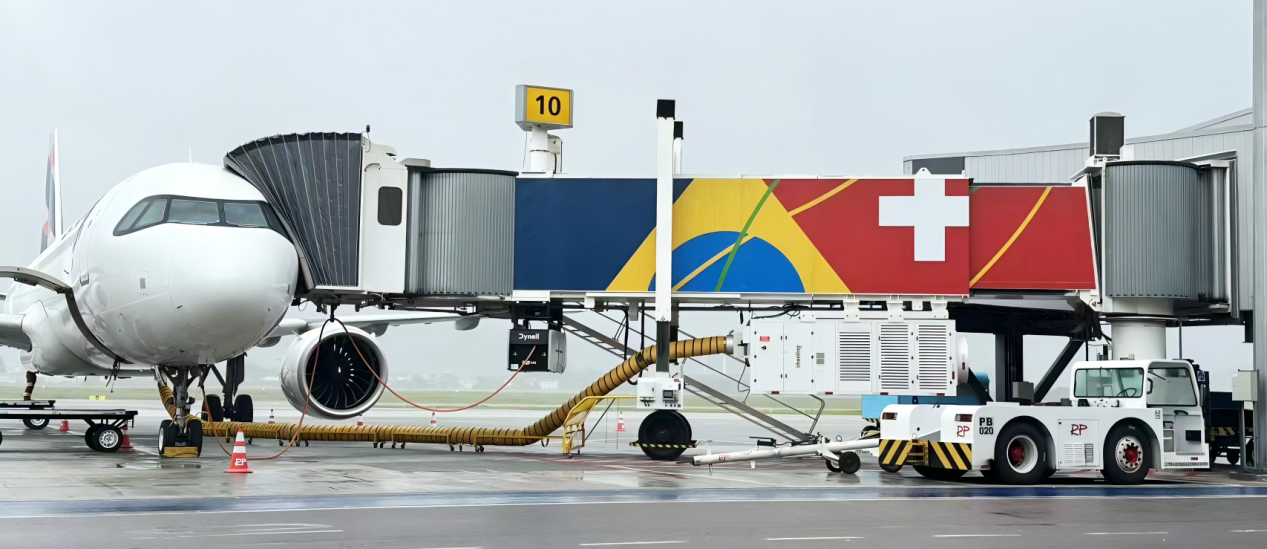
By supplying conditioned air directly to parked aircraft, PCA units help airports significantly reduce fuel consumption, carbon emissions, and noise pollution generated by aircraft Auxiliary Power Units (APUs). Today, PCA is no longer simply a supporting airport facility, it is becoming a key solution for sustainable airport development.

Traditionally, aircraft rely on onboard APUs to maintain cabin comfort and ventilation during boarding, maintenance, and turnaround operations. However, APUs consume large amounts of aviation fuel while producing substantial emissions and noise. PCA units replace this process by delivering conditioned air directly from the airport’s ground infrastructure, allowing APUs to remain shut down during ground operations. As a result, airports and airlines can significantly reduce fuel costs, CO₂ emissions, NOx emissions, and overall environmental impact.
Compared with APU operation, PCA units can also substantially lower airport operating costs. For example, a typical narrow-body aircraft at a European airport may remain at the gate for approximately 90 minutes during boarding, unloading, cleaning, and turnaround operations. During this period, if the aircraft relies on its APU for cabin cooling and ventilation, the APU may consume approximately 120 – 200 liters of aviation fuel.
Based on an average European jet fuel price of €0.8 – 1.0 per liter, the fuel cost alone can reach €100 – 200 per turnaround. In addition, airlines must also bear APU maintenance costs, engine wear, carbon emission charges, and noise-related airport restrictions.
In comparison, operating a PCA unit typically requires only €20 – 50 of electricity consumption per aircraft turnaround. This enables airports and airlines to reduce ground operation energy costs by approximately 60 – 80%, while also significantly lowering emissions.
For a medium-sized European airport handling around 200 aircraft movements per day, the annual savings generated by reduced APU usage can potentially reach several million euros, depending on local electricity prices and operating conditions.
As governments and aviation authorities continue introducing stricter carbon reduction regulations, PCA units are becoming an increasingly important tool for airports seeking to achieve sustainability targets and ESG goals.
Today, many modern airports are integrating PCA units into broader smart energy management systems to optimize overall airport energy efficiency. For newly built airports and terminal expansion projects, PCA systems are now widely considered standard infrastructure for future-ready green airports.

About Shenling
Shenling (SZSE: 301018), established in 1988, is a leading provider of climate control solutions that serves a wide range of industries, including ICT/IDC, industrial, specialized and commercial fields, as well as the heat pump sector. Shenling is one of the largest manufacturers of air source heat pumps and PCA units in China, operating five large-scale production bases covering over 420,000m². Supported by an engineering team of more than 1,000 professionals, Shenling has firmly established itself as a top player in the climate control industry. For more information about Shenling, visit https://www.shenlingglobal.com/
Contacts
Guangdong Shenling Environmental Systems Co., Ltd.
No.29 Shunye East Rd., Xingtan Town, Shunde, Foshan, Guangdong, China
Tel.: (+86)757-22971134
Email: global@shenling.com
Web.: https://www.shenlingglobal.com/
Contact
No.29 Shunye East Rd., Xingtan Town, Shunde
Foshan
Guangdong
China
- (+86)757-22971134
