ABC e-gate
| Company | Reco 3.26 |
|---|

Images



Description
- WHAT IS?
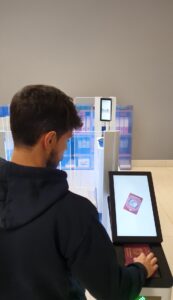
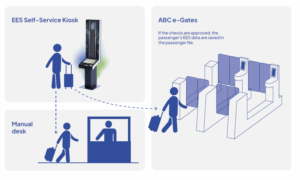
The ABC e-gate is a supervised system for low immigration risk TCN passengers to validate data captured at the SSK.
It creates/updates the passenger’s EES file under the supervision of the border guard.
The system:
- Identifies the type of passenger and runs specific checks such as the existence of a pre-file acquired at the EES Self Service Kiosk, status as a citizen of a low immigration risk country, etc.
- Initiates automated procedures focused on checking the authenticity of documents and consults police databases
- Alerts the Boder Guard to any inconsistencies in the answers of the questionnaire filled in at the EES Self-Service Kiosk
- Captures the biometric data needed by the central system to validate the passage
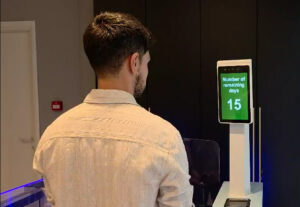
- Alerts the passenger to the remaining duration of stay allowed in the Schengen area
At the end of the process, the border guard consents to the border crossing (by creating/updating the EES data in the passenger’s file) or requests further manual checks.
- AREAS OF USE
The ABC e-gate can be installed at border locations, such as Airports, Ports and Border Places.
- BENEFITS
a. FOR PASSENGERS
- Modern, fast and safe process
- Smooth and completely touchless experience
- User-friendly and intuitive devices
- Reduction of queues, waiting times and dangerous situations
- Reduction of manual operations
- Guaranteed data protection
- Increased quality of services
b. BORDER GUARDS
- Guaranteed compliance with Frontex guidelines
- Compliance with security standards envisaged for the infrastructure
- Compliance with current data processing laws
- Enhanced border control
- Reduction of queues, waiting times and dangerous Situations
- Reduction of manual data capture operations thanks to automated processes
- Reduction of errors in the assessment of results
c. INFRASTRUCTURE MANAGER
- Adequate and scalable IT infrastructure Reduction of manual operations
- Modular and configurable solution
- Guaranteed compliance with Frontex guidelines
- Increased quality of services offered to passengers
- Compliance with security standards envisaged for the infrastructure
- Optimal management of spaces within the infrastructure
- Compliance with IT security standards
- Ability to manage several boardings at the same time
- Compliance with current data processing laws Reduction of infrastructure management costs
- Reduction of queues, waiting times and dangerous situations Enhancement of international image and visibility
Other Products From Reco 3.26
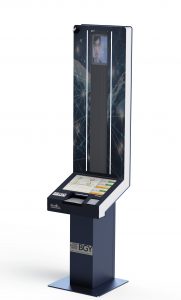
Self-Service Kiosk for Entry/Exit Border Control
1. WHAT IS?
The Self Service Kiosk EES allows for the electronic registration of citizens from Third Country Nationals, both short-stay visa holders and visa-exempt travellers, every time they cross an external EU border (entry and …
The Self Service Kiosk EES allows for the electronic registration of citizens from Third Country Nationals, both short-stay visa holders and visa-exempt travellers, every time they cross an external EU border (entry and …

Video
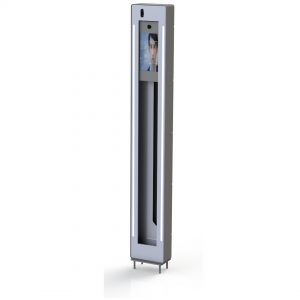
Totem Hawkeye (For face photo capture and for facial biometric verification and identification)
1. WHAT IS?
The Hawkeye Totem is a solution based on facial recognition, to be used to acquire a photo of a face and for biometric verification. It can also be used in a separate …
The Hawkeye Totem is a solution based on facial recognition, to be used to acquire a photo of a face and for biometric verification. It can also be used in a separate …
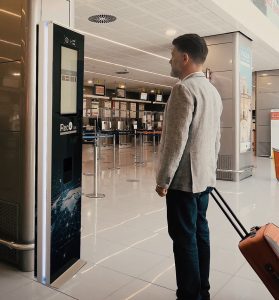
Face2Fly - Biometric Passenger Journey
1. WHAT IS?
The Face2Fly is a Reco's solution for automated and seamless passenger flow management, from airport entry to boarding, using facial biometrics.
The Face2Fly is a Reco's solution for automated and seamless passenger flow management, from airport entry to boarding, using facial biometrics.
Video
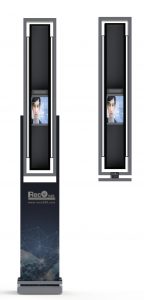
Facial Image Capture Totem
The "Facial Image Capture Totem" solution, designed and developed by Reco 3.26, is the result of a valuable research and experimentation work.
The following are the benefits for the client of using the solution:
Guarantee of …