
The hidden complexity behind your luggage ~ The engineering and systems behind modern airport baggage handling ~
| Company | IESYS GROUP |
|---|---|
| Date | 03.02.2026 |
Behind the scenes, baggage handling is an operationally critical blend of automation and security. More than simple transit systems, they use high-speed logistics and real-time decision-making to align thousands of bags with their respective security requirements and flight departure times. In this complex cyber-physical jigsaw, one small problem can grind operations to a halt. Here, Andrei Iacobita, managing director at expert system integrator IESYS, explores the engineering, security and operational realities that underpin modern baggage handling systems (BHSs).
Globally, airports and airlines handled 5.3 billion passengers and moved commensurate volumes of checked luggage in 2024, yet 33.4 million pieces of baggage were still reported as delayed, misrouted or mishandled that year, despite ongoing investments in automation and process improvements. For system integrators working at the intersection of mechanics, software and security, these figures highlight where complexity still overwhelms infrastructure.
Engineering for variability
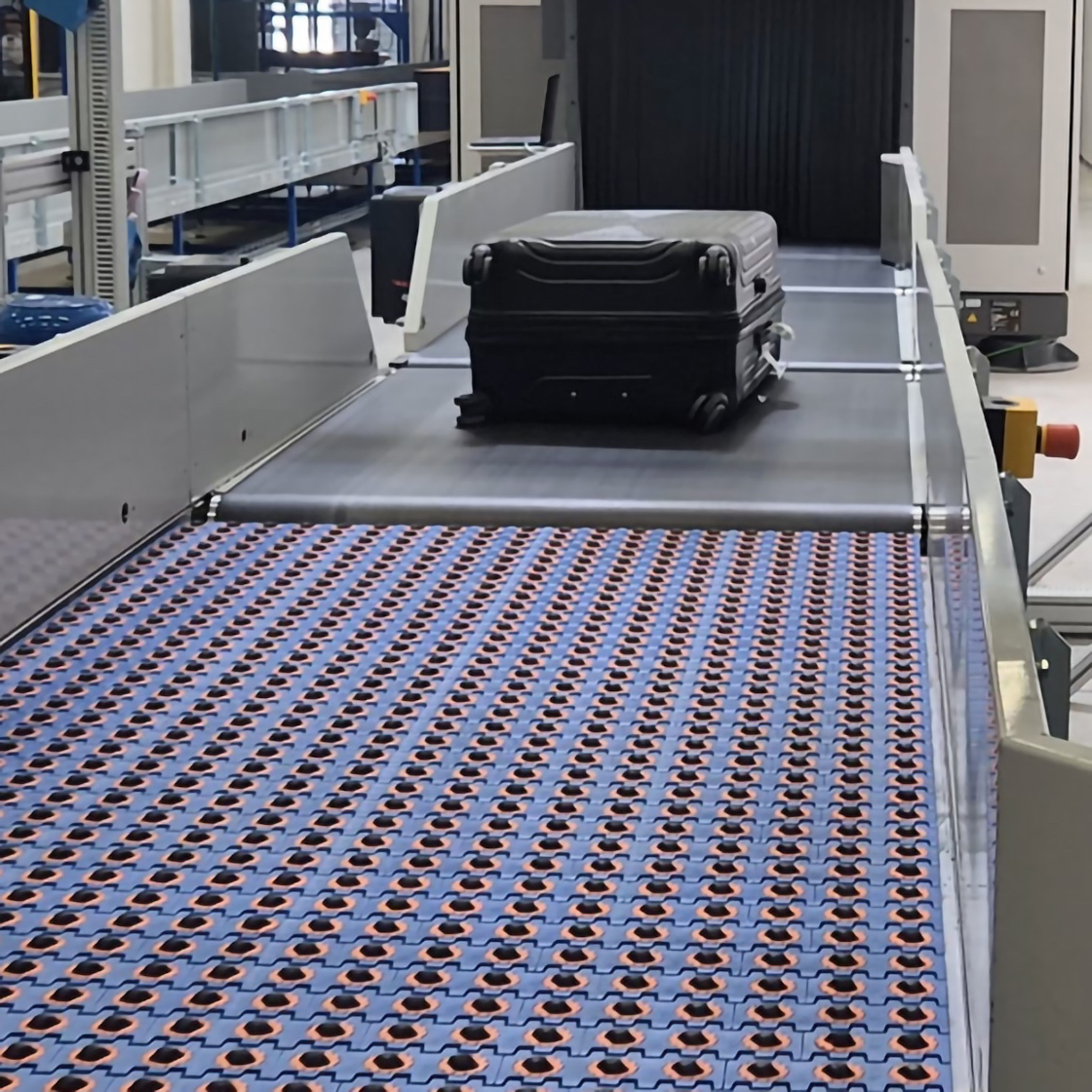
A modern BHS goes beyond the simple conveyor belts many passengers imagine. Mechanically, it comprises extensive networks of conveyor lines, carousels, vertical and horizontal diverters and, increasingly, high-speed transport solutions such as automated guided vehicles (AGVs) in fully automated environments.
Good engineering practice is critical. Abrupt stops, irregular speed changes or poorly designed transitions can quickly cause jams or damage. Therefore, layouts are deliberately designed with optimised angles and conveyor geometries, intentionally avoiding sharp ninety-degree diverters wherever possible. Automatic bag-centring systems are often integrated upstream of screening areas to ensure that luggage enters scanners in the correct position, improving scan quality and reducing the risk of obstructions.
Control systems and software
Mechanical performance alone is insufficient without sophisticated electronic and control systems. Electrical cabinets, frequency converters, PLCs, servo drives and field devices work together to regulate speed, spacing and routing in real time.
At the software level, supervision and control platforms act as the central nervous system of the BHS. Routing logic and decision-making algorithms dynamically assign paths based on flight schedules, screening outcomes and system availability.
Every bag is tracked continuously from acceptance to make-up, with deviations detected early and corrected automatically. This tight integration between physical design and software logic is essential to avoiding lost or delayed baggage and ensuring predictable system behaviour under peak load conditions.
Security-driven design
Against this technical backdrop, security requirements are a critical part of BHS architecture. All systems operate in restricted-access areas and must comply with strict international and national standards governing baggage screening and traceability, such as ECAC Common Evaluation Process standards and TSA certification criteria. Integration with explosive detection systems, operator workstations and alarm-resolution zones directly influences system layout, throughput and redundancy.
These requirements apply uniformly regardless of airport size. A regional airport must meet the same screening thresholds as a major international hub, despite having significantly lower passenger volumes. Therefore, BHS design is shaped as much by regulatory compliance as by operational efficiency, with security forming a structural foundation rather than a functional layer.
Tailored to operational demand
There is no one-size-fits-all BHS. Each airport and, often, each terminal operates under a unique combination of passenger flows, peak patterns, spatial constraints, security challenges and future growth requirements.
This is reflected across the two projects IESYS recently delivered at Oradea and Iași International Airports. At Oradea, IESYS delivered a turnkey BHS fully integrated with EDS screening, dual-view X-ray and SCADA-based centralised monitoring and a modular layout that improves operational flow while future-proofing the architecture for terminal expansion.
In Iași, the focus was on building BHS that maximises traceability and redundancy, with enhanced processing capacity and configurable routing that supports anticipated passenger growth. In both cases, early-stage engineering decisions, from conveyor geometry to control logic and redundant routing paths were critical to aligning operational needs with regulatory compliance.
Despite the challenge of designing bespoke systems for each BHS, the turnkey systems delivered help to unify baggage processing, maintain high throughput and integrate centralised monitoring and control via the airport’s SCADA system.
What remains invisible to passengers is a highly engineered, tightly regulated environment operating under constant pressure to deliver precision at scale. From mechanical design and control software to security compliance and lifecycle maintenance, BHSs balance throughput, reliability and safety in a way few airport functions do.
To explore how tailored BHSs are designed and delivered in practice, visit IESYS’s airport solutions portfolio.
