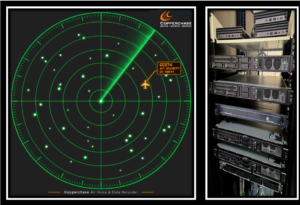
ADS-B Surveillance System
| Company | Copperchase Limited |
|---|
Images
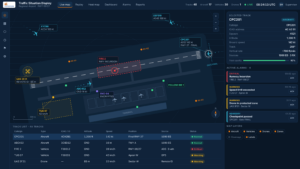
The Copperchase ADS-B Surveillance System is a modular, scalable surveillance and situational-awareness platform that fuses ADS-B and complementary surveillance data into a single, real-time picture of air and ground traffic. It gives airports, military airbases, heliports, vertiports and critical-infrastructure operators continuous visibility of aircraft, ground vehicles and cooperative drones operating on and around their sites.
Multi-source surveillance
The system combines data from networked ground receivers covering 1090 MHz Extended Squitter, 978 MHz UAT, FLARM and Drone Remote ID, together with ADS-B and GPS vehicle trackers. A Data Fusion Engine correlates and de-duplicates reports from overlapping receivers, and a Tracking Engine maintains a smooth, continuous track for every target, updated at least once per second.
Air and ground traffic
Airport and airbase vehicles such as follow-me cars, tugs, buses, rescue and firefighting vehicles carry ADS-B Out trackers, so they appear on the same display as aircraft. Encrypted transmission is supported for military and security-sensitive vehicles, which remain visible only to authorised users. Configurable geofencing stops vehicle transmissions outside defined areas.
Intelligent event detection
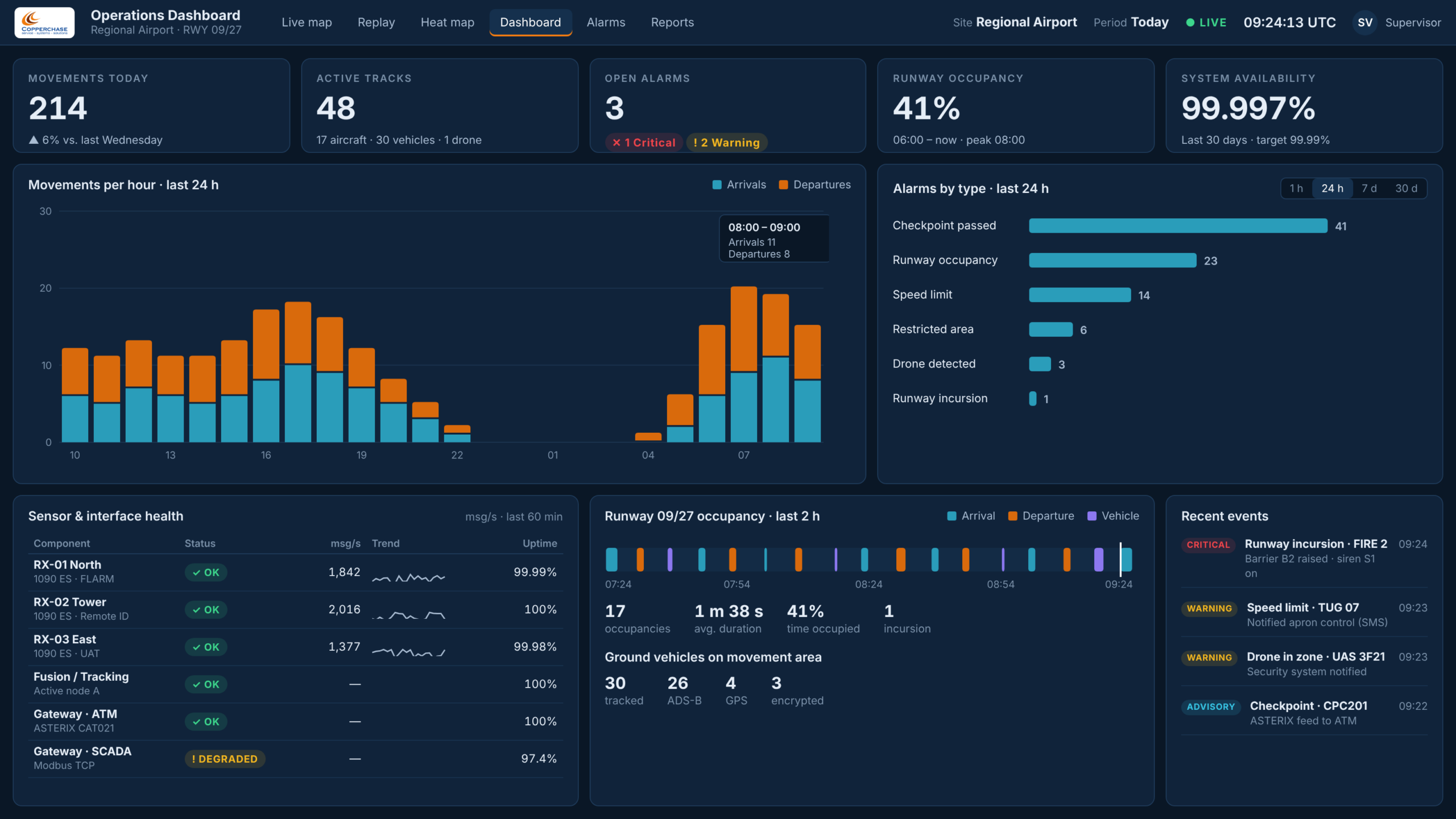
The Event Processing Engine continuously checks every live track against configurable rules: runway occupancy and incursion, protected and restricted zones, checkpoints, speed, direction, stop zones, CPA/TCPA conflict prediction, unauthorised drones and traffic density. Operators can build their own scenarios without software changes. Every event is classified as Advisory, Warning or Critical and routed to the display, the alarm history and, where configured, external systems.
Operator applications
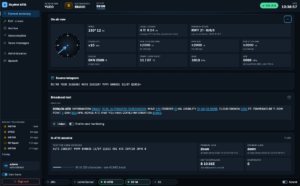
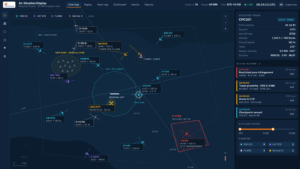
The Traffic Situation Display presents live tracks, zones, alarms and sensor health on a digital map, with multi-workstation support for operations rooms and a Mobile Client for tablets and notebooks. The Control & Monitoring System continuously supervises receivers, links and services. Recording & Replay supports incident investigation, alarm history, traffic heat maps and operational reporting.
Open integration and automated response
The Interface Gateway shares surveillance data and events with ATM and A-SMGCS systems (ASTERIX CAT021), Airport Operational Databases, SCADA, Building Management, security, access-control, fire-alarm and command-and-control systems, and email/SMS notification services. It can also drive field equipment automatically, such as obstacle lighting, sirens, barriers and fire-brigade doors, when a rule is triggered.
Vendor-neutral, scalable and resilient
Built on open, industry-standard formats and protocols, the platform avoids lock-in to a single sensor supplier. It scales from a single-runway regional airport to a multi-site international hub or defence programme by adding receivers, processing capacity or workstations. Standard configurations cover small, regional and international airports, military airbases and transportable deployments, with redundant processing, automatic failover and optional cybersecurity hardening (role-based access, encryption, audit logging and network segmentation).
System
- Surveillance sources: ADS-B 1090 MHz ES, UAT 978 MHz, FLARM (868/915 MHz), Drone Remote ID, ADS-B and GPS vehicle trackers
- Simultaneous tracks: up to 2,000 aircraft and vehicle tracks (indicative)
- Track update rate: ≤ 1 s per track
- Sensor-to-display latency: < 1.5 s (indicative)
- System availability: 99.99% (target)
- Recording archive: 90 days online; up to several years in archival storage
- Alert classification: Advisory / Warning / Critical
- ATM data output: ASTERIX CAT021 (ED-129C compliant); CAT023, CAT025, CAT034, CAT048, CAT062, CAT247 with ground station
- Redundancy: active/standby processing servers with automatic failover; overlapping receiver coverage
- Hosting: on-premises, virtualised or customer-controlled data centre
Outdoor ADS-B receivers
- Frequency coverage: dual-channel 1090 MHz (antenna diversity), or 1090 MHz + 868/915/978 MHz
- Message processing: > 2,000 messages/s
- MLAT timing accuracy: < 20 ns RMS (dual-channel) / < 50 ns (multi-band), GNSS-locked
- GNSS: 72-channel; GPS/QZSS, GLONASS, BeiDou, Galileo
- Power supply: 48 VDC / Power-over-Ethernet; < 10 W average
- Enclosure: IP67, 220 × 220 × 75 mm, approx. 1.3 kg
- Operating temperature: −30 to +50 °C (dual-channel) / −20 to +40 °C (multi-band)
- Network interfaces: Gigabit Ethernet (RJ45), Wi-Fi 2.4 GHz, Bluetooth 5.0; TCP/IP, UDP/IP, HTTP
- Output formats: ASTERIX CAT021, AVR, AVX, Beast, SBS-1, JSON, MAVLink v2, GDL90
- Protection: band-pass filtering; gas-discharge-tube surge and ESD protection on antenna inputs
Rack-mount ED-129C ground station
- Receiver: dual-channel SDR, 1030/1090 MHz; ADS-B, Mode 3A/C/S and DME decoding (DO-260/A/B, ICAO Annex 10)
- Timestamping: ± 50 ns, GPS hold-over
- RF recording: embedded solid-state disk, 90-day retention
- Self-monitoring: integrated low-power ADS-B transmitter (BITE)
- Compliance: ED-129C, CE
ADS-B vehicle tracker
- Standards: ADS-B Out DO-260B / ICAO Annex 10 Vol. 4; ETSI EN 303 213-5-2
- Transmit frequency: 1090 ± 1 MHz
- Transmit power: 1–20 W peak, configurable
- GNSS: GPS, GLONASS, Galileo, QZSS (integrated antenna)
- Input voltage: 5–32 VDC
- Power consumption: < 1 W
- Geofencing: configurable; transmission stops outside defined areas
- Configuration: USB / Bluetooth / Wi-Fi
- Dimensions: 160 × 95 × 120 mm; magnetic or permanent mount
- Operating temperature: −30 to +60 °C
- Ingress protection: IP64
Other Products From Copperchase Limited
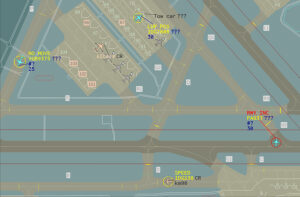
A-SMGCS (Advanced Surface Movement Guidance and Control System)

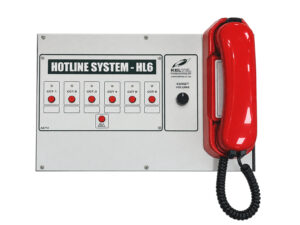
Airfield Crash Alarm System (ACAS)
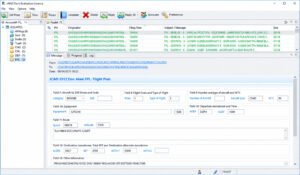
ATC Message Handling System (AFTN / AMHS)
AGL (Aeronautical Ground Lighting) Control & Monitoring System