AODB and Flight Management
| Company | Simpleway |
|---|

Images


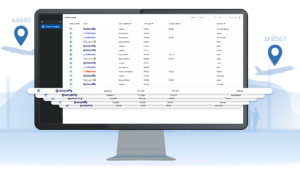


The Simpleway AODB and Flight Management module is the flight-data backbone of Airport CX. It is the airport operational database (AODB) that holds your live flight data and feeds it to every screen and announcement from one source, so displays and audio always agree.
Key benefits:
- A built-in AODB, so you need no separate flight data vendor and no middleware to connect one
- Keep your existing AODB or flight data provider and add Simpleway’s flight-management layer on top
- Operators create, edit, and control flights in real time, with full manual control when it is needed
- Airline agents can be given access to only their own flights
- Gaps are filled when an external feed is late or missing, so passengers still see the right information
- One source of truth drives flight displays, announcements, wayfinding, and advertising together
How it works:
The AODB is the single record of what is happening at the airport. It holds flight schedules, gate and stand assignments, baggage belt allocations, and estimated against actual times, and every other part of the platform reads from it. Update a flight once and the change reaches the displays, the announcements, and the wayfinding within seconds.
You can run it two ways. Use the built-in AODB as your source of flight data or integrate an AODB or external flight data provider you already run and add the Simpleway flight-management layer over it. Either way, the AODB stays the backbone, and you keep control of what passengers see and hear.
Operators do more than read the feed. They can create a flight from scratch with all its parameters, edit an existing flight in real time as operations change, and handle charters, diversions, seasonal routes, and special events. Role-based access lets airline agents manage only their own flights while supervisors keep airport-wide oversight. When external data arrives late or incomplete, staff can fill the gap so the passenger-facing information stays correct.
The AODB reaches beyond timetables. It can feed operational and monitoring systems and trigger automated scenarios for delays, diversions, and cancellations, so a single change in flight status can update every channel and set the right response in motion. Estimated against actual times support operational planning and reporting, giving your team a live picture of how the airport is running.
- Data held: flight schedules, gate and stand assignments, baggage belt allocations, estimated and actual times
- Deployment: built-in AODB, or integration with an existing AODB or external flight data provider
- Flight management: create, edit, and delete flights in real time; charters, diversions, seasonal routes, special events
- Access control: role-based; airline agents limited to their own flights; supervisor oversight
- Data resilience: manual entry to fill gaps when external feeds are late or missing
- Distribution: feeds FIDS, announcements, wayfinding, and advertising from one source; updates in seconds
- Automation: triggers scenarios for delays, diversions, and cancellations; feeds operational and monitoring systems
- Reporting: estimated against actual times for operational planning
Other Products From Simpleway

Airport CX: End-to-end Airport Communication Solution

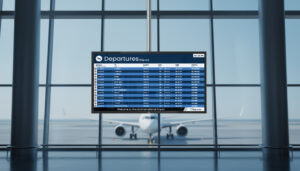
Flight Information Display System (FIDS)

Intelligent Voice Announcement System

Touchscreen Microphone Stations (micnode2h/g)