Reimagining Passenger Flow: Kobe Airport’s Journey from Domestic Gateway to Global Hub

SITA
Case Study – Kobe AirportAt a Glance:
Customer: Kobe Airport, Japan
Challenge: Maintaining smooth, intuitive passenger experience while expanding airport to support new international operations
SITA Solution: SITA Flex Essentials common-use workstations, TS6 self check- in kiosks, and future-ready Scan & Go self-bag drop capability
Impact: Seamless international processing from day one; faster passenger flow and shorter queues; scalable digital infrastructure designed to support future self-service adoption, route expansion, and higher traffic volumes.
How thoughtful planning and flexible operations are shaping the airport’s future
Once serving only domestic routes, Kobe Airport is transforming into a vital regional hub that bridges Japan with key Asian destinations. Located just 20 minutes from central Kobe, it is recognized as one of Japan’s best-connected city airports.
As passenger traffic continues to rise across the Kansai region, the airport’s new international terminal was designed to accommodate the surge in demand and enhance connectivity with major cities such as Seoul, Shanghai, Nanjing, Taipei, and Taichung. Initially operating via charter flights, these services will scale toward scheduled international operations, strengthening Kobe’s position in Japan’s broader air network and helping balance tourism flows across neighbouring hubs like Osaka and Kyoto.
The benefits are clear for travellers: shorter travel times, streamlined journeys, and improved access to key destinations. These enhancements also provide a boost to the local economy, attracting more visitors and supporting regional business development.
Designing a Smarter Passenger Experience
Kobe faced the challenge of transforming a domestic-only airport into a gateway capable of welcoming international travellers. This was not simply a matter of adding international routes, but of rethinking how passengers would move through the terminal from the moment they arrived. With the airport located close to Hyogo’s key attractions and business districts, it plays a critical role in shaping first impressions of the region, making intuitive, efficient, and largely self-directed journeys a clear priority.
Unlike larger hub airports with extensive physical space and established international infrastructure, Kobe needed an approach that balanced flexibility with simplicity. Passenger flows had to accommodate fluctuating volumes, new airline operations, and different traveller profiles, all without adding unnecessary complexity for staff or passengers. This placed a premium on design choices that could adapt over time, rather than locking the airport into rigid processes from day one.
To support this vision, the airport implemented modern, scalable systems that integrated self-service check- in, automated baggage handling, and streamlined border processing into a cohesive passenger journey. These capabilities reduce reliance on manual touchpoints and fixed counters, allowing passengers to move through the terminal with minimal friction while giving airport teams the ability to manage traffic more dynamically.
By aligning operational design with digital infrastructure, Kobe Airport has created an environment that can scale alongside demand. The result is a passenger experience that feels calm and controlled, even as international services expand, while providing the operational flexibility needed to support future growth and strengthen the region’s appeal to inbound travellers.
Laying the Digital Foundations for Growth
At the heart of Kobe Airport’s new terminal lies a unified, passenger- first design underpinned by SITA’s airport technology. From the outset, the focus was on creating a digital foundation that could support multiple airlines, evolving routes, and variable demand without adding complexity to daily operations. To achieve this, the airport adopted SITA Flex Essentials to run shared, common-use workstations and check-in counters across its operations.
This common-use model gives airlines the flexibility to launch and scale services quickly, without the need for dedicated infrastructure or lengthy setup cycles. For passengers, it delivers a consistent experience regardless of carrier or destination, reducing friction and confusion as international services expand. For the airport, it creates a more resilient operating environment that can adapt as traffic patterns change.
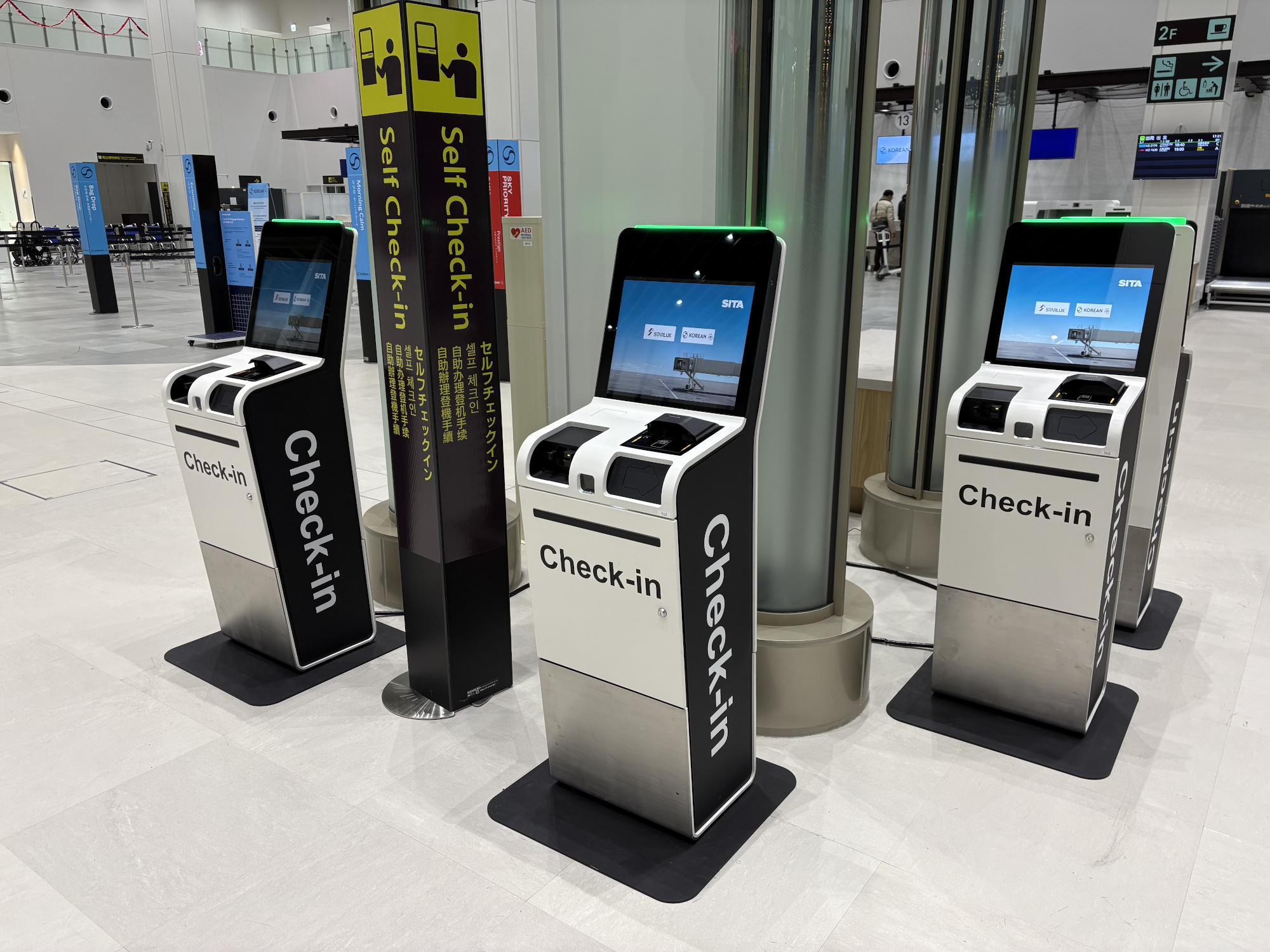
TS6 self-service kiosks form part of Kobe Airport’s passenger-first terminal design, supporting scalable international operations.
Complementing this are SITA’s TS6 kiosks, which are currently in use and support self-service check-in across the terminal. Scan & Go Self Bag Drop (SBD) units are also available as a future capability, designed to further extend self-service deeper into the passenger journey as airlines adopt the solution. Together, these touchpoints are intuitive, multilingual, and scalable—supporting efficient peak-hour management while maintaining a calm, passenger-friendly flow through the terminal.
Beyond the front-of-house experience, the platform also strengthens operational control. Airlines can configure systems remotely, while airport teams manage check-in resources, gate usage, and passenger flows with greater visibility and flexibility. Together, these capabilities create a terminal environment that feels modern without being overwhelming: efficient, adaptable, and designed to grow in step with Kobe’s ambitions as an international gateway.
Expanding Horizons for Kobe and Beyond
Since the opening of its international terminal, Kobe Airport has recorded steady growth in inbound travel, supported by the introduction of new charter routes linking the city to key destinations across Asia. This phased approach allows the airport to build international connectivity progressively, while ensuring operations remain efficient and passenger experience standards are upheld as demand grows. Local tourism bodies have indicated that the expanded network has the potential to attract hundreds of thousands of additional international visitors annually, delivering meaningful economic benefits across the Hyogo Prefecture.
The airport’s upgraded capabilities are also strengthening its role within Japan’s wider aviation landscape. With its close proximity to central Kobe and seamless access to the shinkansen network, the airport offers a highly convenient gateway for international visitors. This positions Kobe as a practical alternative to larger regional hubs such as Kansai International Airport, particularly for short-stay travellers and business visitors who value speed, simplicity, and proximity to the city.
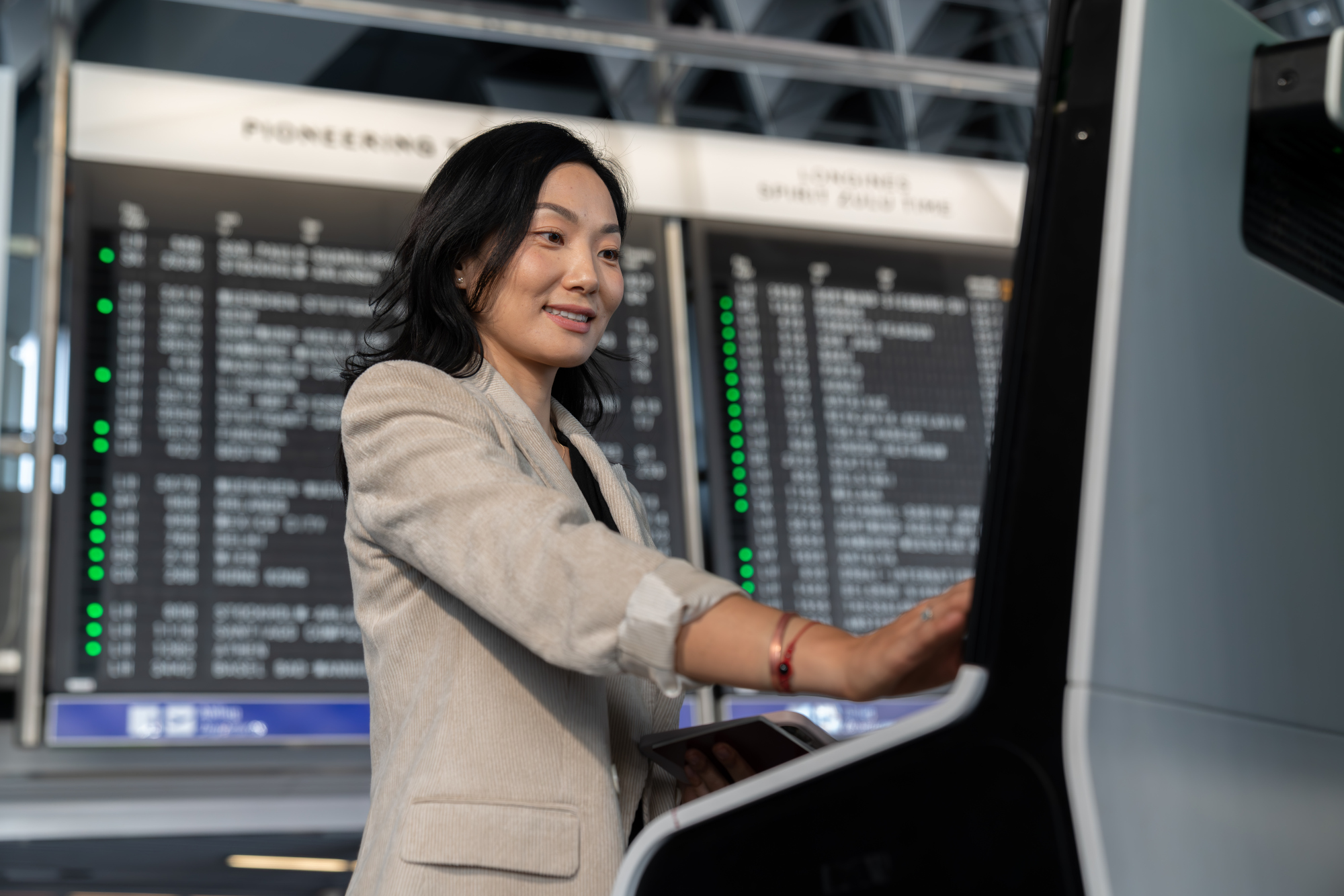
Passenger self-service check-in using SITA’s TS6 kiosk, designed to support faster and more intuitive airport
SITA’s Role in Shaping Japan’s Connected Future
By evolving from a domestic-focused airport into an international connector, Kobe Airport is demonstrating how mid-sized, city-based airports can scale strategically. Rather than expanding through size alone, the airport is prioritising flexibility, digital readiness, and passenger-centric design—an approach that allows it to absorb growth while maintaining a calm, efficient travel experience.
According to Kobe Airport, the transformation reflects a broader ambition to make international travel simpler and more accessible across the Kansai region. The team noted that close collaboration with SITA was instrumental in enabling a smooth launch of international operations, ensuring systems, processes, and passenger flows were aligned from day one. Together, these efforts illustrate how thoughtful planning and technology-driven design can help regional airports play a larger role in global connectivity without compromising operational discipline.
Kobe Airport’s transformation highlights a new blueprint for regional aviation in Japan—one where growth is driven by flexibility, digital readiness, and passenger-centric design. With SITA’s common-use technologies at its core, the airport is equipped to scale international services efficiently while maintaining a seamless travel experience. Together, Kobe Airport and SITA illustrate how the next generation of airports can connect cities to the world with confidence, agility, and purpose.
