Serving the regions’ connectivity, new routes are taking off within the VINCI Airports network
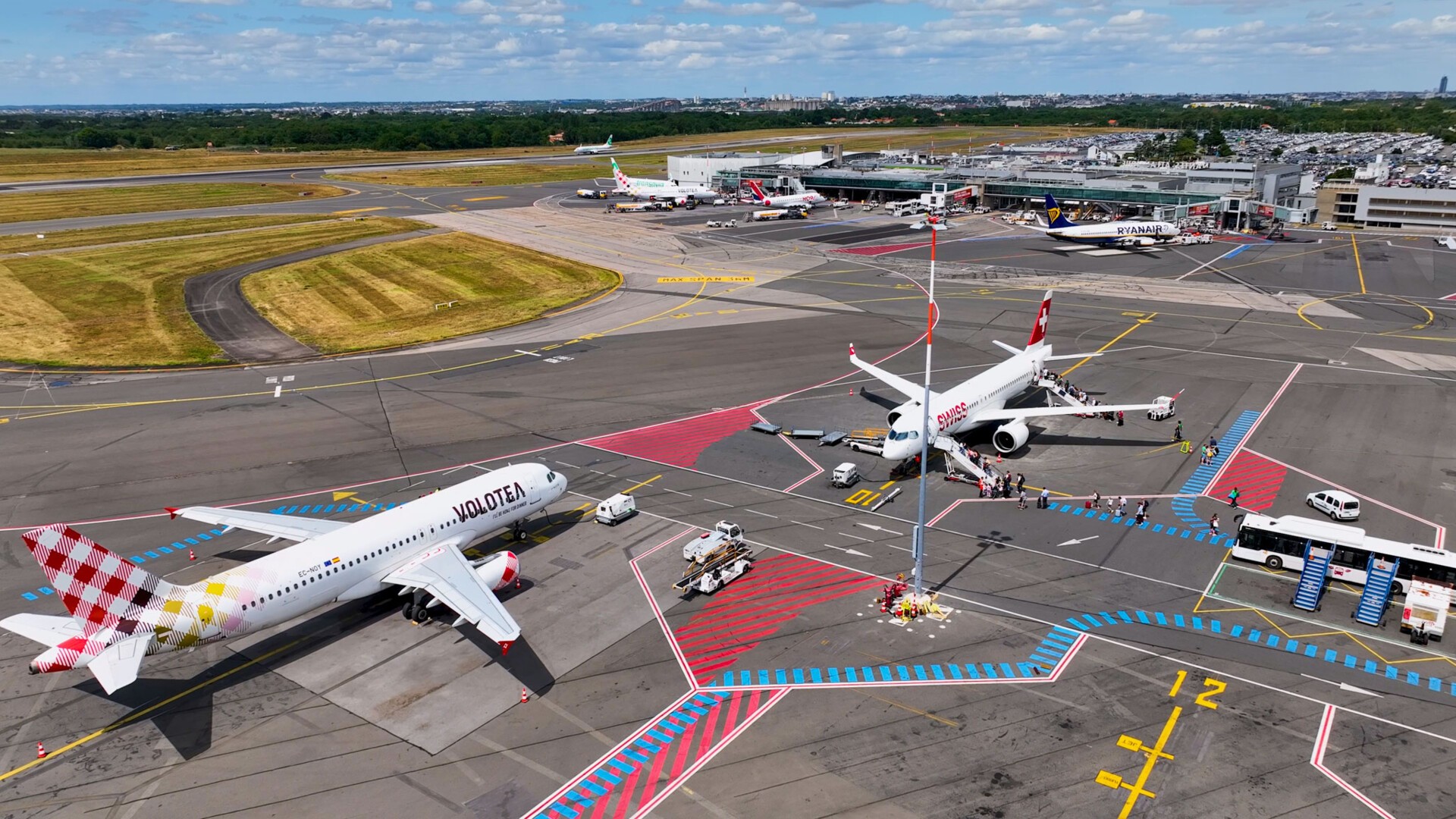
In recent months, VINCI Airports has opened several new routes within its network, strengthening connections between its airports and the rest of the world. From Budapest to Seoul with Asiana Airlines, from Faro to London with Jet2, and from Monterrey to Paris with Aeromexico, these connections illustrate the network’s ability to develop new routes, responding both to the growing mobility needs of travelers and the challenges of attracting investment to different regions.
Connections that make sense
Each new route addresses an identified need. Some create new connections between previously underserved regions, such as Budapest-Algiers with Air Algérie, which provides direct access between Central Europe and North Africa. Others strengthen strategic routes or high-demand destinations by offering additional seats. In Europe, the opening of routes like Lisbon-Berlin with Eurowings , Nantes-Brussels with Volotea, and Faro-Warsaw with Wizz Air leads to more direct connections and simplified journeys for passengers.
By multiplying these targeted openings, VINCI Airports facilitates access to territories, supports their tourist activity and supports local economic exchanges.
A dynamic driven by the diversity of opportunities
These new routes also cover different needs, from short to long-haul, with direct flights and strategic destinations.
Routes such as Kansai-Bangkok with VietJet or the new connections to Seoul operated by Asiana Airlines allow some airports to be opened directly to Asia, without going through major international hubs, while many intra-European openings strengthen the links between cities and capitals of the continent.
With more than 300 partner companies, VINCI Airports relies on a diverse ecosystem to develop these new routes and adapt its offering to each territorial reality.
A constant focus on the passenger experience
The development of new routes is accompanied by a constant focus on service quality. Each new route has a clear objective: to offer a simple, seamless journey tailored to each traveler’s profile, regardless of the airport or destination.
This approach translates concretely into the deployment of innovative services, such as virtual agents, the design of adaptable spaces to suit local needs, and a retail and dining offering tailored to passenger expectations.

Each airport in the network thus adapts its infrastructure and services to combine operational performance and passenger experience.
A development carried out in close collaboration with the airlines
These new routes are the result of close and regular work with the airlines. Together, the teams identify development opportunities, analyze markets (data, geography, traffic patterns, travel reasons, etc.) and support the ramp-up of the routes.
The opening of routes such as Kansai-Bangkok with VietJet or Toulon-London City with British Airways illustrates this ability to develop routes with high added value.
Several new route openings are detailed below:
| Route | Airline | Opening |
| Grenoble – Belgrade | Wizz Air | January 2026 |
| Puerto Plata – Panama City | Copa Airlines | January 2026 |
| Edinburgh – Rome | Ryanair | February 2026 |
| Kansai – Bangkok | Vietjet | February 2026 |
| Nantes – Brussels | Volotea | February 2026 |
| Faro – London | Jet 2 | March 2026 |
| Faro – Bucharest | Wizz Air | March 2026 |
| Faro – Varsaw | Wizz Air | March 2026 |
| London – Paris | Air France | March 2026 |
| London – Bucharest | Animawings | March 2026 |
| Lisbon – Berlin | Eurowings | March 2026 |
| Budapest – Alger | Air Algerie | April 2026 |
| Budapest – Seoul | Asiana Airlines | April 2026 |
| Monterrey – Paris | AeroMexico | April 2026 |
| Porto – Varsaw | LOT Polish Airlines | May 2025 |
| Toulon – London | British Airways | May 2025 |
| Kobe – Seoul | Asiana Airlines | May 2025 |
| London – Bahrain | Air Asia X | June 2026 |
| Lyon – London | Wizz Air | June 2026 |
| Monterrey – Madrid | Iberia | June 2026 |
