Bordeaux Airport, in partnership with Outsight, launches a Physical AI experiment to anticipate and reduce passenger waiting times
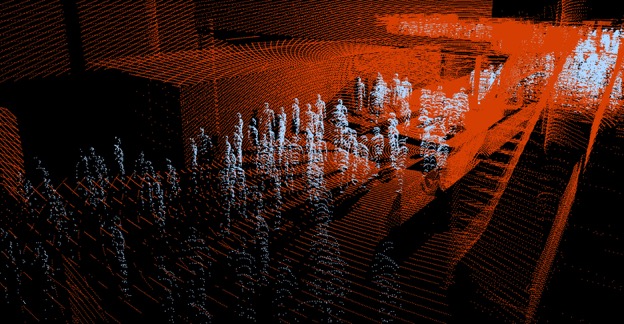
Outsight today announced the launch of a pilot phase of the Physical AI solution developed by Outsight at Bordeaux Airport in France, as part of a deployment in strategic areas of Hall A. This initiative is part of the airport’s continuous improvement approach, aimed at enhancing passenger flow and operational performance.
Welcoming nearly 6 million passengers annually to 92 destinations, Bordeaux Airport places quality of experience and operational efficiency at the heart of its management. In an environment where infrastructure is inherently constrained, optimising existing spaces, dynamic queue management, and anticipating congestion points are key to maintaining smooth operations.
In order to refine its understanding of passenger flows and make its operational decisions more objective, the airport has chosen to experiment with an Artificial Intelligence solution called Physical AI, capable of modeling movements within the terminal in real time.
Developed by Outsight, this technology relies on the creation of a dynamic digital twin (Motional Digital Twin) of the terminal. It provides a continuous, three-dimensional view of passenger movements in targeted areas, including security checkpoints and other critical spaces.
The flows are digitised in a strictly anonymous manner within a shared spatial repository system, allowing for the analysis of queue formation, density changes, and the actual use of different areas. The system operates without image capture or personal identification, guaranteeing confidentiality by design while offering a accurate operational representation of the reality on the ground.
Already deployed in several leading international airports, Outsight’s solution is among the emerging technologies for managing complex infrastructures. At Bordeaux Airport, it is being deployed in specific areas of Hall A to evaluate its impact under real-world operating conditions. This pilot phase will allow teams to have a shared and objective view of passenger flows, to more precisely adjust resources according to demand, and to improve operational coordination between the different companies and governmental services involved in welcoming passengers. The objective is to concretely assess the contribution of Physical AI to the continuous optimisation of processes and the overall fluidity of passenger journeys.
Raul Bravo, President and Co-Founder of Outsight “The use of Physical AI has become a standard in how modern airports operate, regardless of their size. Today, what matters is not size, but relevance. Airports like Bordeaux are adopting proven technologies that integrate seamlessly into their operations and deliver immediate and tangible added value.”
Talel Jaouad, Head of Airport Process Department at Bordeaux Airport: “We are experimenting with this technology to improve our understanding and control of passenger flow, allowing us to optimize our resources. The ultimate goal, of course, is passenger satisfaction. For our staff, as well as our partners operating in the terminals – airlines, service providers, and retailers – this pilot represents an undeniable advantage for fine-tuning their actions in real time and within a framework of continuous improvements.”
This initiative illustrates a fundamental trend in the airline industry: passenger flow management, supported by data and artificial intelligence, is gradually becoming a key lever for operational performance.
